


Themes
African American History
Enslavement
Women’s History

Periods & Events
19th Century
20th Century
Great Depression

Skills & Document Types
Close Reading
Oral Histories

Overview and Instructional Use

In this lesson, elementary school students will analyze an oral history excerpt to learn about African American historyenslavement, and women’s history during the 19th and 20th centuries while practicing close reading. 

This lesson can be used:

  • As part of a unit on enslavement. 
  • To practice close reading skills. 
  • As part of a unit on the Great Depression. 

Materials

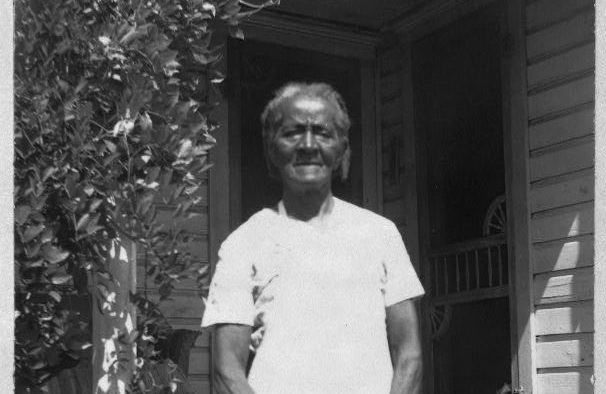
Header Image: Sarah Francis Shaw Graves, Age 87. Federal Writers Project, United States Work Projects Administration, Library of Congress. (1936-1938).

Procedure:

  1. Display the text and read it as a group. Give students time to read it and generate questions. Use background material to encourage more engagement with the material when necessary. 
  2. Discuss the excerpt using the guided questions below.  
Step 1: Display and Read the Text

Display the text. Give students time to generate and answer questions about the text and write notes. Use the background material at the end of this activity whenever you think it will encourage students to ask more questions and think more about how to engage with the excerpt.

From the book The American Slave: A Composite Autobiography, Federal Writers’ Project, in the Newberry Library Reference Collection – Local and Family History

My name is Sarah Frances Shaw Graves or Aunt Sally as everybody calls me. I am eighty-seven (87) years old and I was born March 23, 1850 in Kentucky somewhere near Louisville. I was brought to Missouri when I was six months old with my Mamma who was a slave owned by a man named Shaw who had allotted her to a man named Jimmie Graves who came to Missouri to live with his daughter. Emily Graves Crowdes. I always lived with Emily Crowdes. We left my Papa in Kentucky as he belonged to another man. My Papa never knew where my Mamma and me went and my Mama and me never knew where my Papa went. They never wanted Mama to know where my Papa was because they knew Mama would never marry as long as she knew where he was. Our Master wanted Mama to marry again and raise more children for slaves but Mama said she would never marry a man and have children so she married my step-father, Trattle Barber, because she knew he had a disease and could not be a father.

Step 2: Discuss the Excerpt

Discuss student observations using the guided questions below.

Potential Questions
  • What kind of source is this? (Oral history)
  • Is it a primary source? (Yes, because Sarah Graves was an eyewitness to her own life.)
  • What information about Sarah Graves can you find in this excerpt? (Her name, age, date of birth, where she was born, where she lives, her background, and family history)
  • What information can you find about her mother? (Her history, where she lived, who owned her, who she was married to, what she thought about having children)
  • What questions do you have after reading this?

Have students discuss the choice Sarah Graves’s mother made about her second marriage. Why did she marry the man she married? Why didn’t she want to have children? What does it tell us about a woman’s life in slavery?

Background

In the 1930s, during the Great Depression, the federal government created many programs to provide paying work for people who were unemployed. One of these programs was the Federal Writers’ Project (FWP), a part of the Works Progress administration. The FWP employed writers to interview people who had formerly been enslaved. This oral history of Sarah Graves was one of more than 2,300 first-person accounts of slavery collected by these writers.

Sarah Graves says that her mother’s owner, Shaw, had allotted her to another man, Jimmie Graves. This refers to the practice of “hiring out.” Sarah Graves’s mother would have worked for Graves, who would have paid Shaw for her services. She, of course, would have received no wages.

Words to Know

excerpt | a selection from or small part of a longer piece of writing

Additional Resources

Illinois Social Science Standards

This lesson supports the following standards from the Illinois Learning Standards for Social Science:

History
  • SS.1 H.2. Generate questions and investigate diverse individuals and groups who have shaped a significant historical change. 
  • SS.3.H.2. Explain how the diverse perspectives of people and events develop and shape communities and/or regions. 
  • SS.3.H.2. Explain how the diverse perspectives of people and events develop and shape communities and/or regions. 
  • SS.5.H.2. Use information about a historical source, including the creator (author), date, place of origin, intended audience, and purpose, to judge the extent to which the source is useful for studying a particular topic 

Common Core

This lesson supports the following Common Core Literacy in History/Social Science standards:

English Language Arts: History/Social Studies
  • CCSS.ELA-LITERACY.RI.3.1: Ask and answer questions to demonstrate understanding of a text, referring explicitly to the text as the basis for the answers.
  • CCSS.ELA-LITERACY.RI.3.6: Distinguish their own point of view from that of the author of a text.
  • CCSS.ELA-LITERACY.RI.4.2: Determine the main idea of a text and explain how it is supported by key details; summarize the text.

The College, Career, and Civic Life (C3) Framework

This lesson supports the following C3 Framework standards:

Dimension 2, History
  • D2.His.9.K-2. Identify different kinds of historical sources.
  • D2.His.2.3-5. Compare life in specific historical time periods to life today.
  • D2.His.3.3-5. Generate questions about individuals and groups who have shaped significant historical changes and continuities.
  • D2.His.6.3-5. Describe how people’s perspectives shaped the historical sources they created.
  • D2.His.11.3-5. Infer the intended audience and purpose of a historical source from information within the source itself.
  • D2.His.13.3-5. Use information about a historical source, including the maker, date, place of origin, intended audience, and purpose to judge the extent to which the source is useful for studying a particular topic.

Download the following materials below:

  • A copy of the “Narrative of Sarah Graves” activity
  • A transcription of the excerpt used in the activity