

Themes
Chicago History
Music & Performance
Nightclubs
Race Relations
Shifting Cultural Tastes
Periods & Events
20th Century
Midcentury
Skills & Document Types
Image & Object Analysis
Live Recordings
Newspaper Articles
Photographs
Record Covers
Use this essay and source set to:
Between the mid-1950s and the mid-1970s, Chicago’s Rush Street nightlife district was home to one of the most celebrated nightclubs in America, Mister Kelly’s. The club and its two sister properties – the London House in the Loop and the Happy Medium, also on Rush Street – constituted a live entertainment empire controlled for most of those two decades by the Chicago-born Marienthal brothers, George (1909-1972) and Oscar (1913-1963). It was an empire built on a foundation of sophistication, elegance, and hospitality.
The Marienthal enterprises also boasted a strong and enduring commitment to social progress and civil rights, taking on both the de facto racial segregation and the blandness of content that characterized many of the other nightspots of the period. With its hip, sometimes edgy programming – including deliberately provocative, taboo-violating comics such as Lenny Bruce, Mort Sahl, Dick Gregory, and George Carlin – and its open-to-all admission policies, Mister Kelly’s and the other Marienthal venues helped push the entertainment world out of the complacent, conformist 1950s and into the franker, more free-spirited 1960s.
These three clubs, and especially the nationally renowned Mister Kelly’s, were the hub of a mid-century Golden Age of live entertainment centered in Chicago’s Gold Coast neighborhood, just north of the Loop. By taking a closer look at these clubs and some of their associated images and artifacts, we can get a glimpse of the cultural history of this period, and how tastes, habits, lifestyles, and even politics developed and shifted over the course of a generation. By the time Mister Kelly’s, the London House, and the Happy Medium closed in 1975, victims of larger social and economic forces, the three nightclubs had had a significant impact on what Americans listened to and laughed at. It’s an influence that still lingers in the public’s wider acceptance of performers who seek to prod and challenge the audience, rather than simply soothe and distract it. In learning about the history of these three special clubs, gone for half a century, we can learn something about how public tastes and expectations have evolved over time.
Ask Students
Mister Kelly’s (which opened in 1953), the London House (which opened in 1946 as a restaurant, becoming a jazz club a few years later), and the Happy Medium (opened 1960) were the brainchildren of George and Oscar Marienthal, two brothers of Jewish background who grew up in Hyde Park. They were shrewd businessmen who used their managerial and marketing skills to turn their dining and later entertainment venues into a lucrative, high-profile mini-empire, with frequent turn-away crowds and constant media attention. (Indeed, one Chicago newspaper had a nightlife reporter whose beat was essentially Mister Kelly’s, which he would attend on a nightly basis to chronicle the acts and visiting celebrities.)
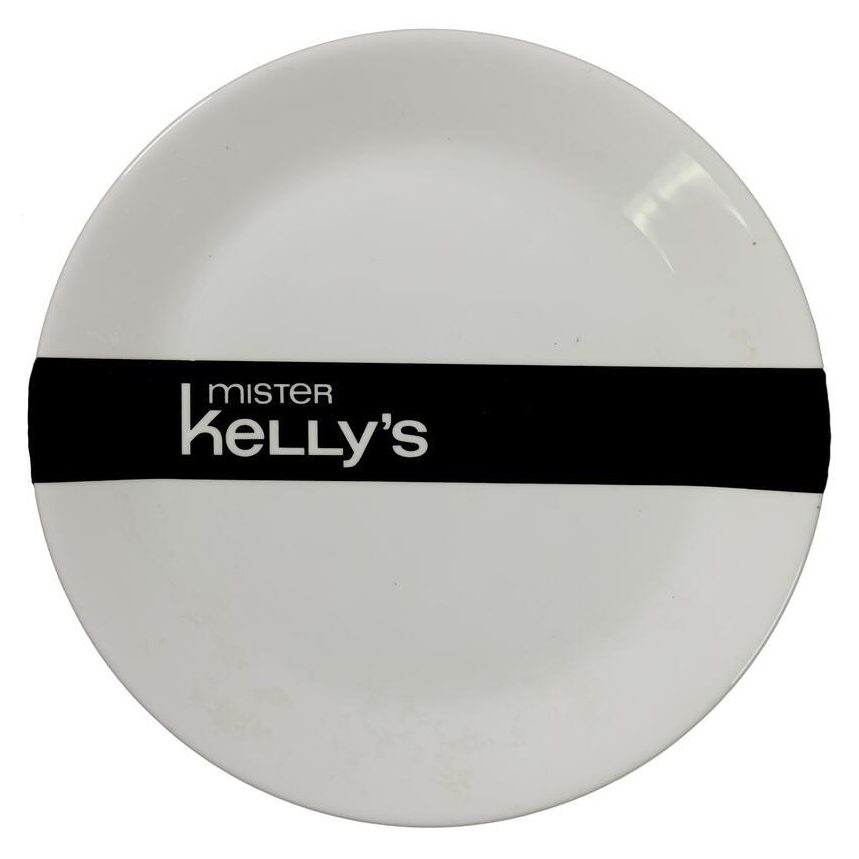
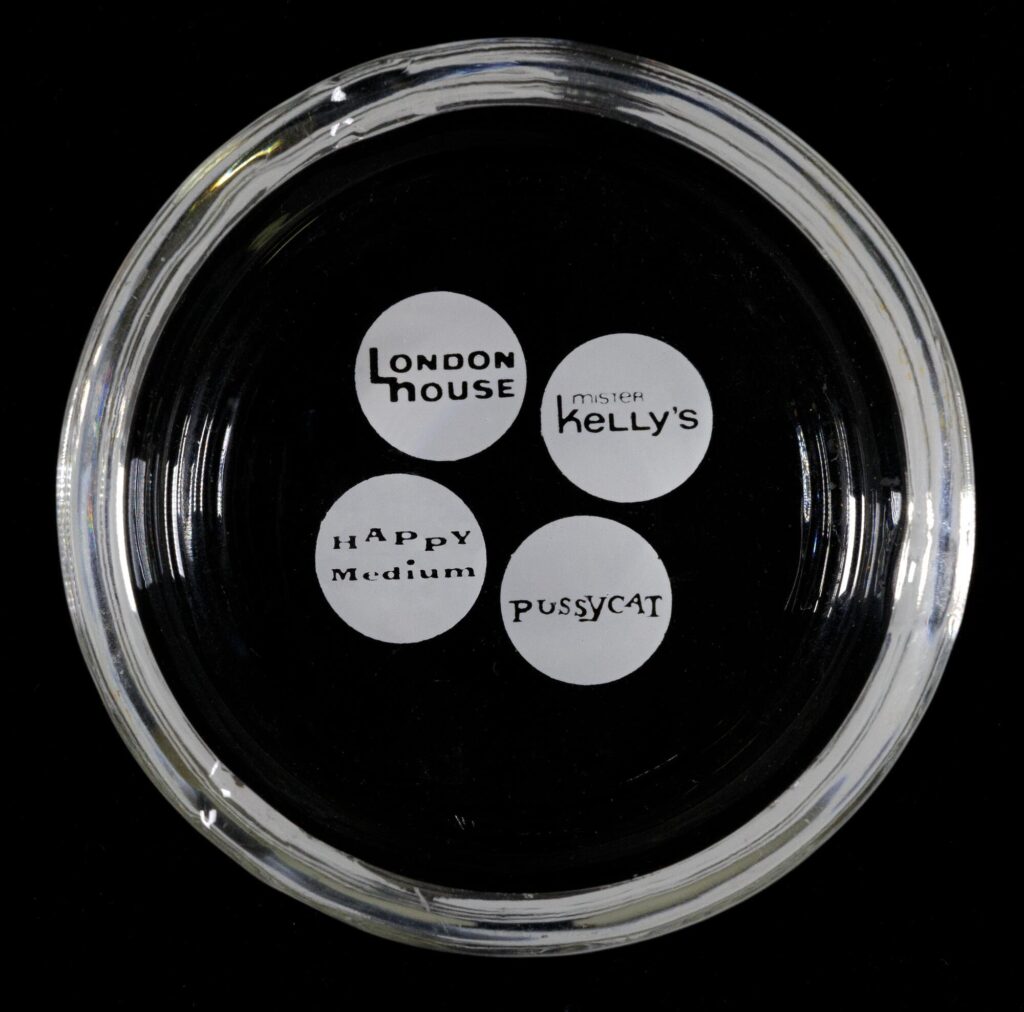
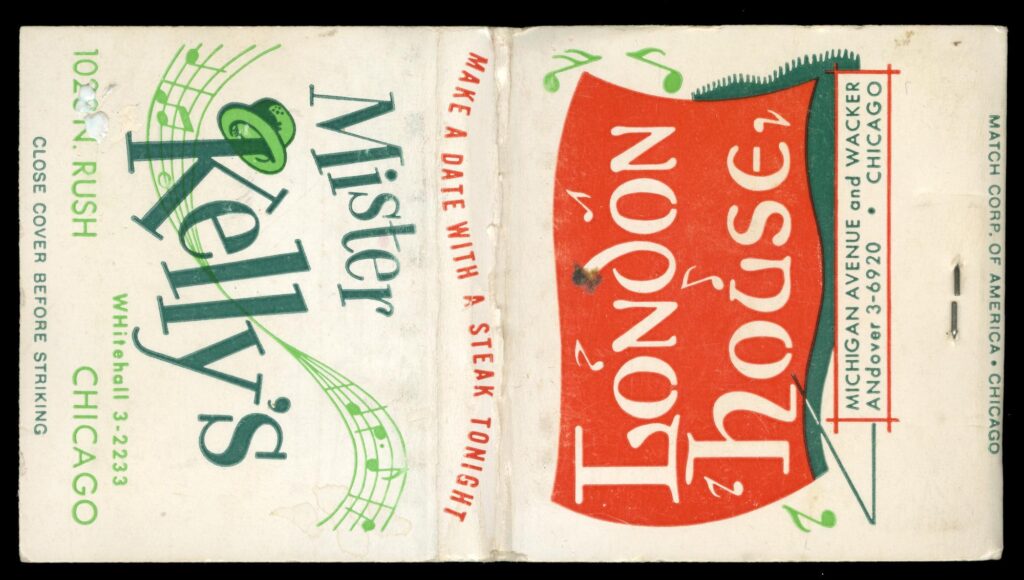
The siblings knew how to create an inviting, fashionable environment, involving not only top-notch entertainment, but also similarly high-level service, sound systems, décor, food and drink options, and even graphic design. They understood what would attract was known as “cafe society” – a free-spending, fun-loving clientele eager to experience the best the city had to offer, and always in search of the best places to see and be seen. These patrons were what might be called “influencers” today, their presence marking the special places that promised a fine evening out. They dressed well and wished to display themselves in flattering settings imbued with sophistication and class. And the Marienthals gave them what they wanted, down to the patterns on the china, ashtrays, and even matchbooks. (Nightclubs were smoky places in that long-ago era, before smoking bans took effect.) Everything was thought through, creating a total experience for guests that was stylish and urbane.
The two brothers split the sizable job of managing their properties. George, who had run officers’ clubs for the army during World War II, was the detail man, taking responsibility for keeping guests happy and employees busy. His younger brother, Oscar, was th talent scout. He recruited performers who were often near the start of their careers, before they had achieved stardom and, if they caught on, then picked up the option he had included in the contract for a return engagement.
The nightclub business at the time was not known for its sterling ethics, but the Marienthals were different. Their fair treatment of staff and talent tended to be reciprocated in the form of employee loyalty and enduring relationships with performers, who would often return again and again to the smallish Chicago clubs, even if they could do better financially elsewhere.
There are many examples of the esteem with which musicians and comics held Mister Kelly’s and the London House. In 1971, famed jazz trumpeter Roy Eldridge declared: “I’ve played every big jazz club in the country except London House. It took me a while to get here, but now I can say I’ve played ’em all.” That same year, vocalist Roberta Flack was invited to perform at Mister Kelly’s. Unsure of whether to accept, she consulted with Chicago-based civil rights leader Jesse Jackson. According to Flack, “Jesse Jackson told me I couldn’t appreciate the importance of this engagement. It’s costing me money to play Mister Kelly’s, but it’s worth it for the prestige.” And a decade earlier, the celebrated comedy team of (Mike) Nichols and (Elaine) May did so well at Mister Kelly’s that they took out a newspaper ad thanking the club’s audience.
After Oscar died in 1963, his recruiting duties were picked up by George and by Oscar’s one-time assistant, Arlyne Rothberg, who became the clubs’ top talent booker. She was one of several women who held important positions in the organization, a rarity back then.
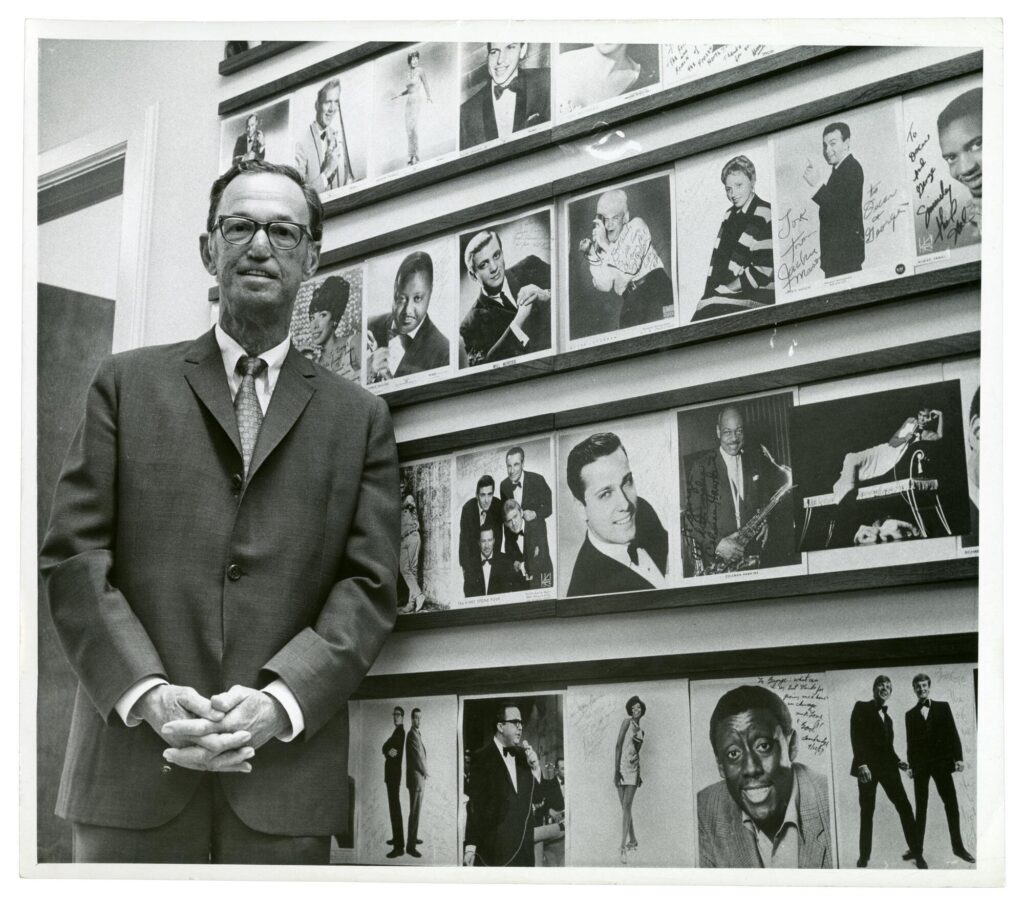
The Marienthals were more than entrepreneurs. They were tastemakers in many fields, including jazz, pop music, comedy, and theater. As culture scouts, they were always on the lookout for quality acts with broad appeal. You can sense George Marienthal’s pride as he stands next to the rack of publicity stills in his club, a roster of entertainers and celebrities that he and his brother had selected, nurtured, and brought to public attention. These performers, and the fame that Mister Kelly’s had helped them accrue, were in some sense the Marienthals’ life work.
The Marienthal brothers had competition in mid-century Chicago. There were equally lavish spaces nearby, such as the Chez Paree, Empire Room, and Playboy Club, as well as other progressive, style-setting venues such as the Gate of Horn (run by Albert Grossman, who would later become the manager of Bob Dylan and other folk icons). But only the Marienthal empire made stars in music and comedy on a regular basis.
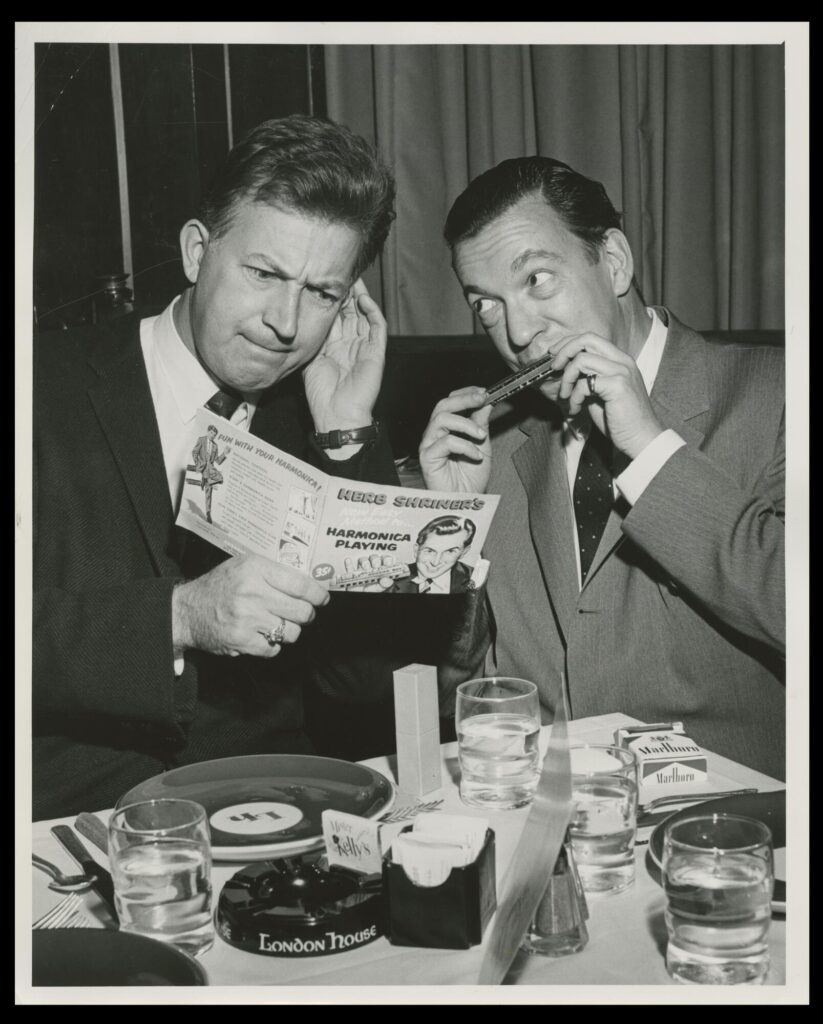
The siblings’ three clubs cross-marketed and cross-pollinated, quickly growing into a dominant force in local nightlife. They became the go-to place for memorable evenings and milestone celebrations. As a 1960s magazine story noted, “There’s a Marienthal-owned restaurant or bar open 21 hours a day,” from early-morning breakfast through the latest of late-night cocktails. All of these spaces shared a relaxed joie de vivre, which we can see in the photo of Oscar playing the harmonica with homespun humorist and media personality Herb Shriner. In their businesslike, low-key way, the Marienthals helped define an era: not just in terms of the acts they presented and the food they served, but, as we will see, in their progressive attitudes and staunchly liberal, anti-racist policies.
Ask Students
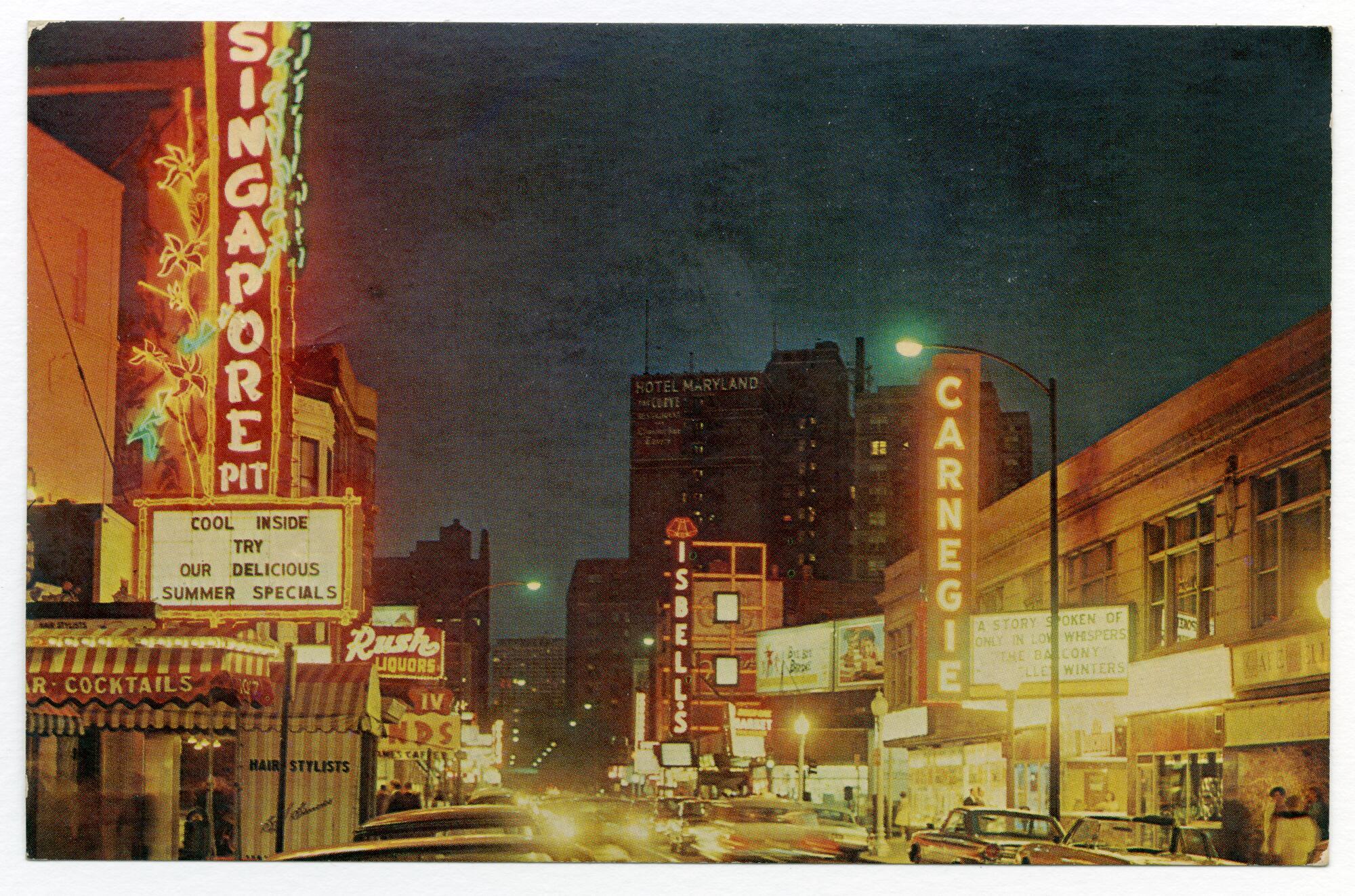
Rush Street, the diagonal avenue that cuts through Chicago’s Gold Coast neighborhood on the Near North Side, was at one time the heart of the city’s nightlife district. The above postcard depicts it as what Chicago author Nelson Algren called a “neon wilderness”: glamorous and enticing, but also cold and anonymous. The postcard’s reverse side describes Rush Street as the “well-lit mile of fun and frolic [that] has every type of music for dancing and listening. The bands and singers provide thrilling entertainment from twilight to dawn.”
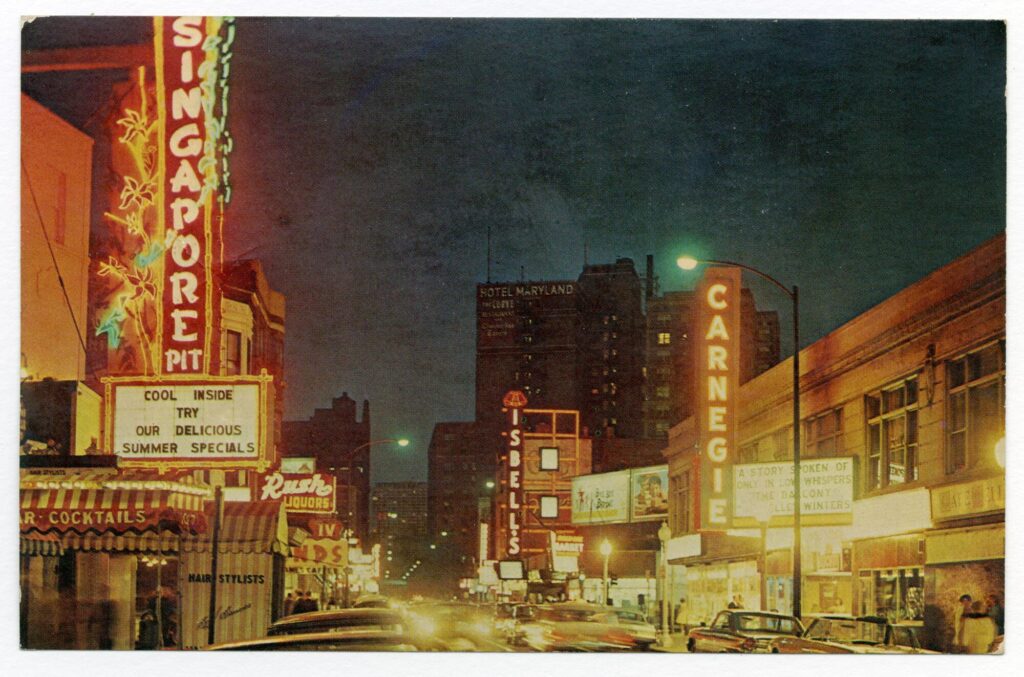
Rush Street was everything that makes the city fun and exciting – but it had its shadow side, too. Contemporary accounts refer to the strip as “Chicago’s Glitter Gulch,” a quasi-vice district spangled with garish neon signs and dominated by organized crime. Through its control of certain business suppliers, such as linen services and vending machines, as well as its outright or partial ownership of some clubs, taverns and restaurants, the mob was a major presence on the street.
Amid the many strip clubs and dive bars in the area, Mister Kelly’s and its sister spaces were something of an oasis of honest business practices and high-class entertainment. As with all the Rush Street hangouts, Mister Kelly’s clientele consisted of a mix of locals and visiting conventioneers. What distinguished these venues from their neighbors was the high caliber of the talent, the consistently high quality – and relatively high prices, for the time – of the food and drink, and the sophistication of the clientele, wherever they came from. Mister Kelly’s, elegant and well-run, helped cleanse the neighborhood’s image, transforming it from sordid to suave, a place where respectable people of discriminating taste would congregate. The club’s reputation for quality allowed it to survive not one but two devastating fires, in late 1955 and early 1966, coming back each time stronger than ever. (The story may be too good to be true, but it’s said that vocalist Lainie Kazan was singing “Smoke Gets in Your Eyes” when the 1966 fire started.)
By attracting talent of national scope, Mister Kelly’s and the London House helped rehabilitate the image of Chicago itself. Long associated with the violence of Al Capone and the open corruption that flourished in the 1920s and later, the city found itself recast as an entertainment mecca, rivaling New York, New Orleans, and San Francisco in terms of depth of talent and party atmosphere. Suddenly, Chicago seemed not just a toddling town, as the old song goes, but a grownup, sophisticated city, open to new and different cultural experiences, including daring comedy and cutting-edge jazz and other musical forms.
As America began to move in new directions culturally and politically following eight sleepy years under the aging, avuncular President Dwight D. Eisenhower (1953-1961), Chicago and its top nightclubs became a locus of change. Chicago may have been known as “the Second City,” but Mister Kelly’s and the London House were second to none. For performers, playing there meant you had arrived; you were at the top of the game. The frequent presence of newspaper columnists and other media people meant that word of your success would spread quickly. As the nightclubs’ reputations grew, they attracted top performers, who in turn benefited from, and also enhanced, the clubs’ prestige. It was a win-win situation, a mutually beneficial relationship between star-potential performers and star-making venues. Rush Street as a whole took on some of Mister Kelly’s luster, and higher-class jazz cabarets, piano bars and other venues began to proliferate in the late 1950s and early 1960s.
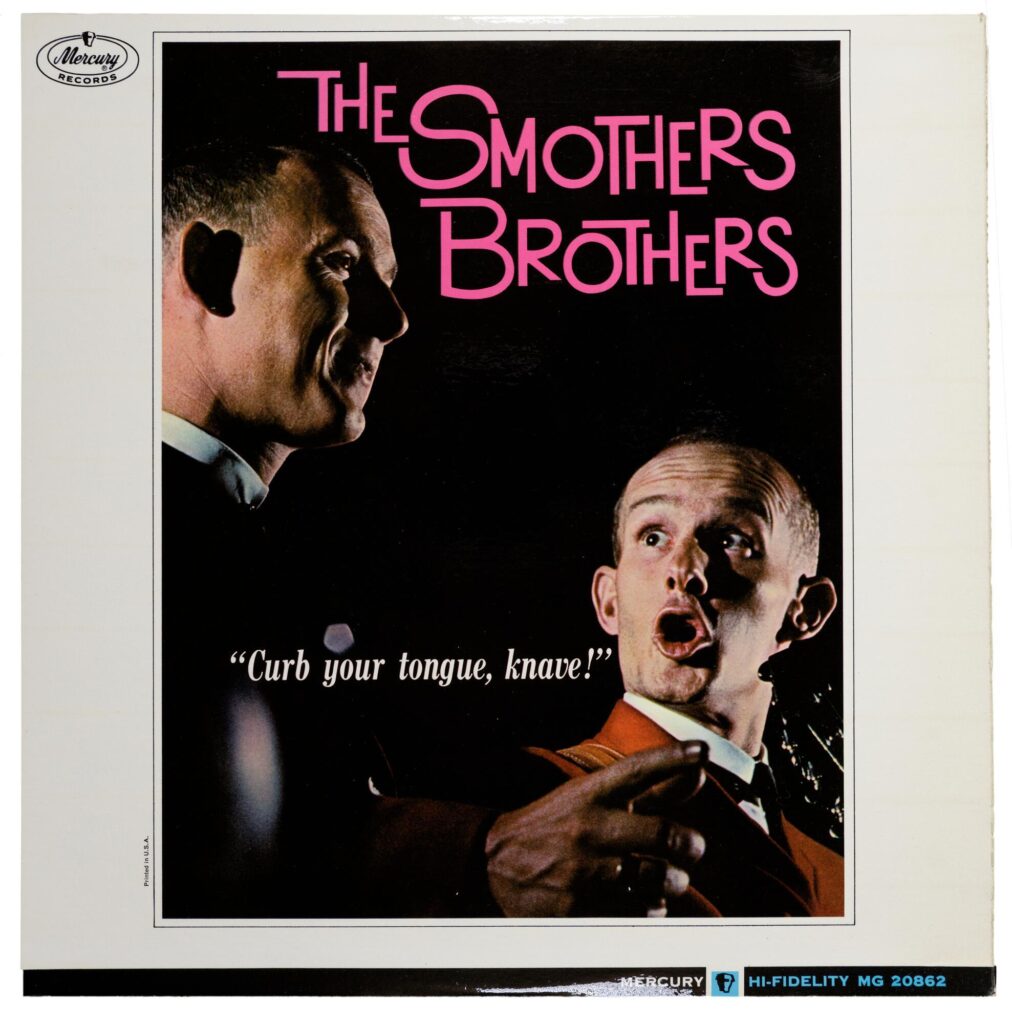
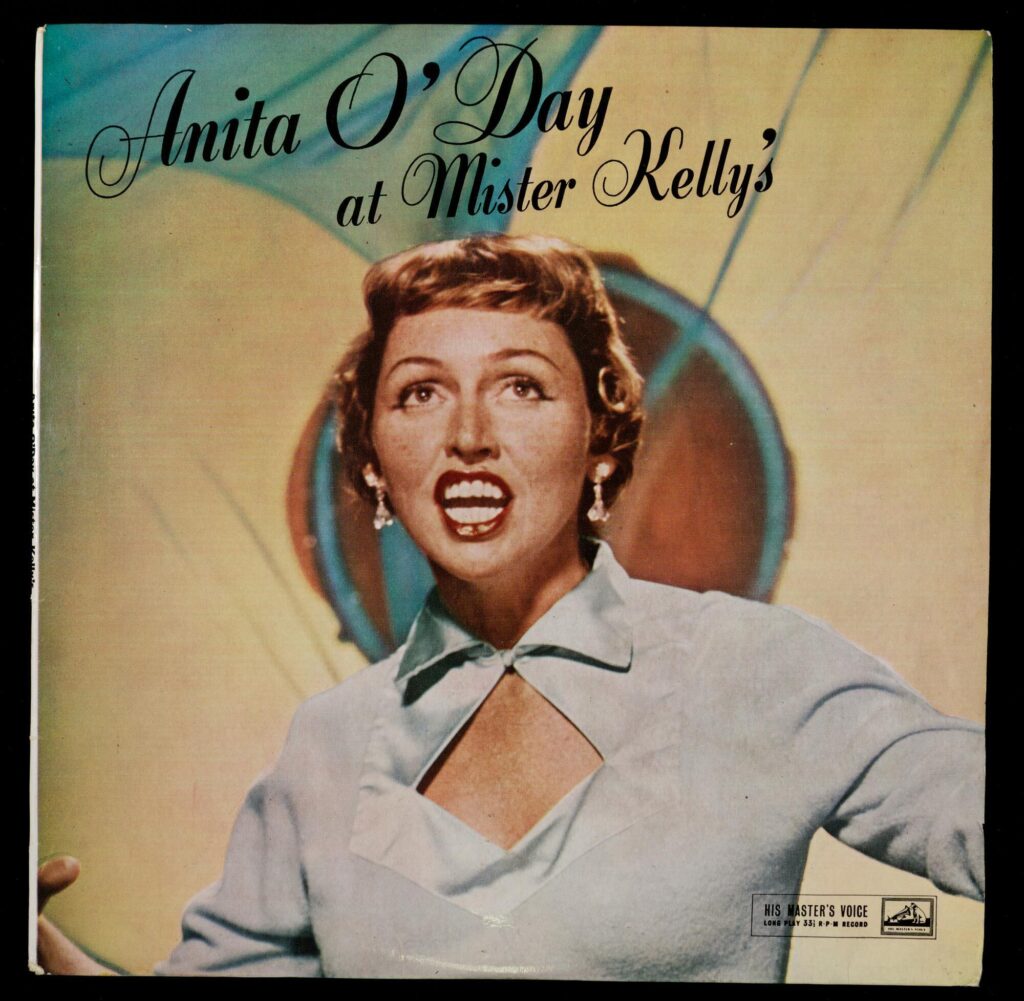
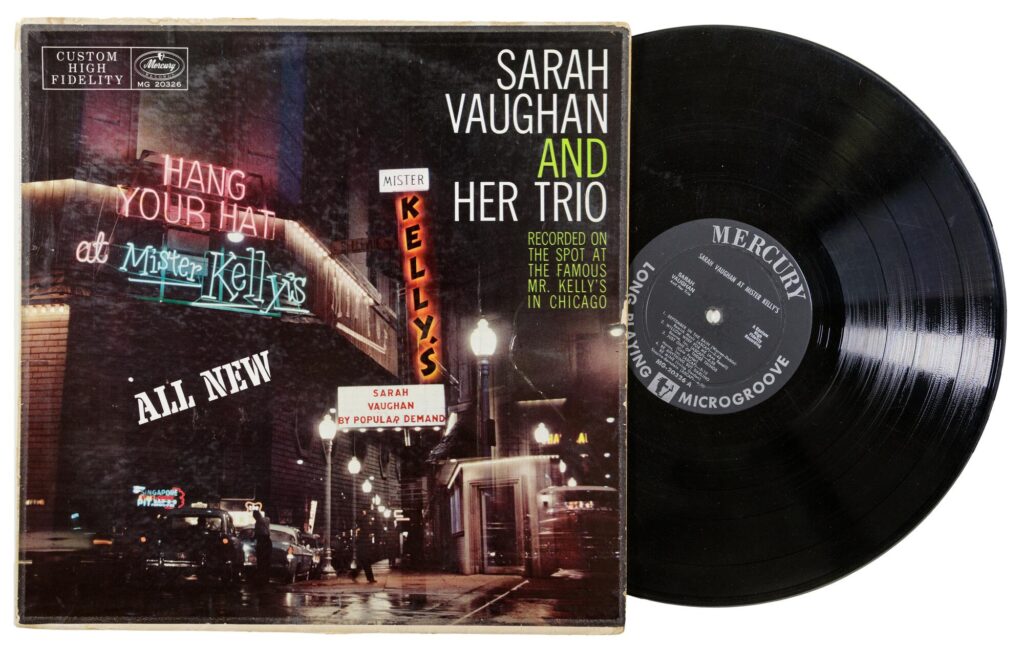
Seeking to capture a touch of the Marienthal magic, many artists – ranging from the Smothers Brothers comedy act to jazz musicians Anita O’Day, Sarah Vaughan, and Oscar Peterson – recorded live albums at Mister Kelly’s and the London House, benefiting from the clubs’ enthusiastic audiences and excellent sound systems. These albums, some of them still in print, are a tribute to the clubs’ centrality in the mid-century music and comedy scenes, as well as a permanent part of the Marienthal legacy.
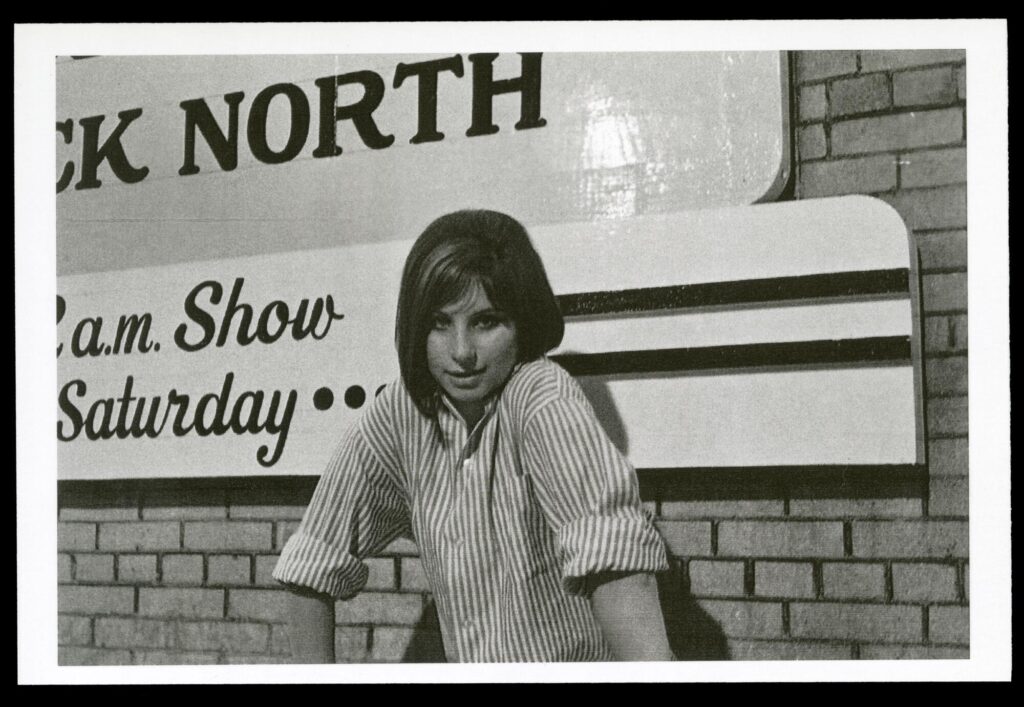
For twenty years, a long time in the pop culture world, Mister Kelly’s and its sister venues were local and even national institutions, signifying artistic accomplishment and appeal, and making Rush Street feel like the place to be for entertainers. For example, Barbra Streisand, whose 1963 Mister Kelly’s debut helped propel her into fame, decided to use photos she had taken at the club, elsewhere on Rush, and at the nearby Oak Street Beach as cover photos for her early record albums. We see her gazing out boldly at the viewer, full of youthful confidence, looking like someone ready to conquer the world. To be at Mister Kelly’s, the crown jewel of Rush Street, was truly to be somewhere special.
Ask Students
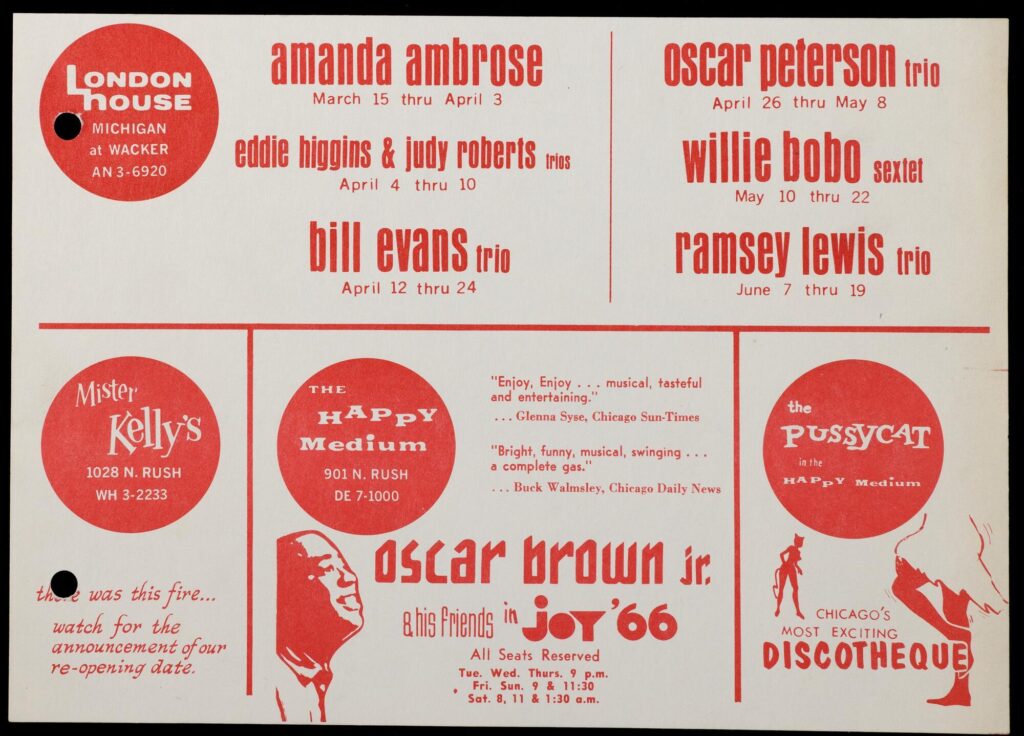
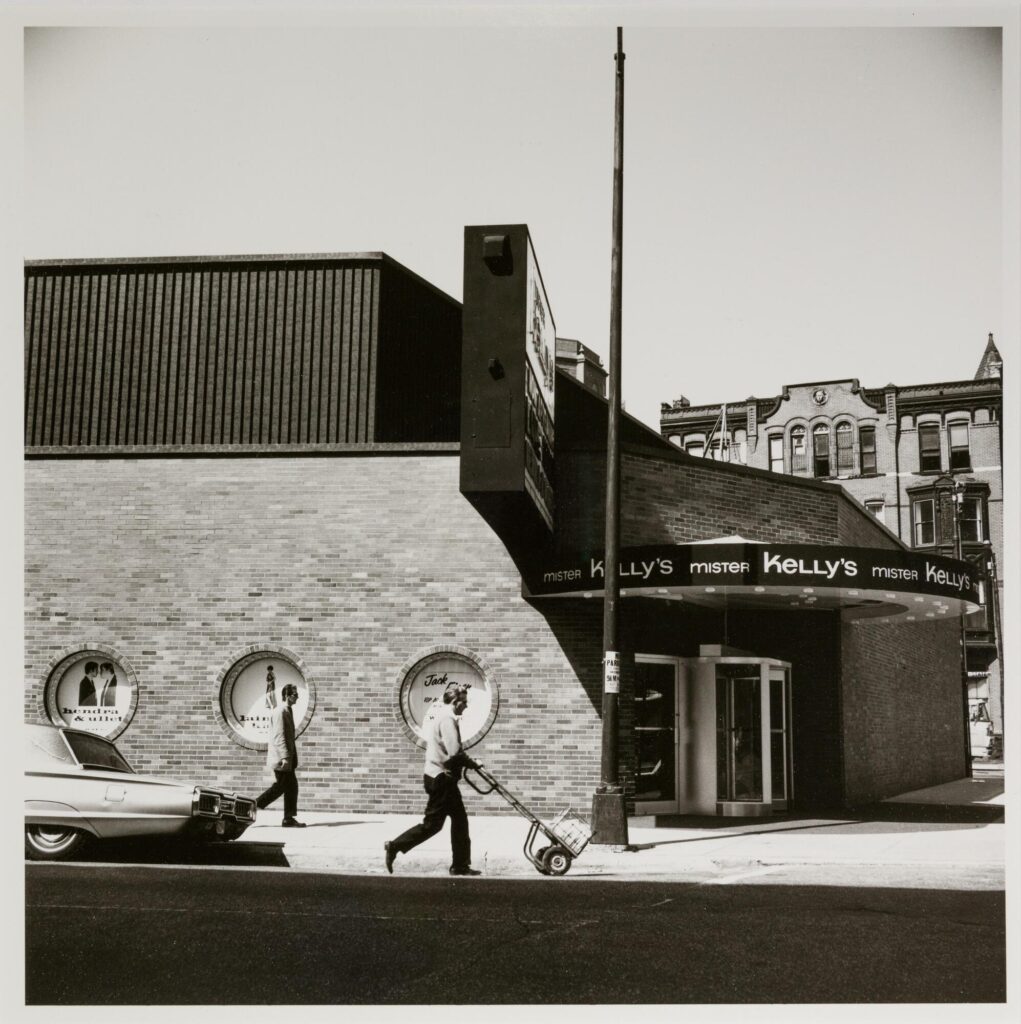
The three major clubs had similarly high standards, but differed in their artistic offerings. Mister Kelly’s was a classic cabaret, usually pairing a comic with a musician – although some performers, such as musical parodist Allan Sherman, mixed humor and song. It boasted a first-class kitchen and, of course, a well-stocked bar. (The building, on Rush Street at East Bellevue Place, is now occupied by Gibson’s Restaurant.)
The London House, the oldest Marienthal enterprise, was a steakhouse specializing in jazz, especially piano jazz, with famous keyboardists of the period such as Oscar Peterson, Marian McPartland, Bill Evans and Ramsey Lewis appearing on a regular basis. It was located in an ornate 1920s-era skyscraper on Wacker at Michigan Avenue, just south of the Chicago River (and, incidentally, on the exact site of Fort Dearborn).
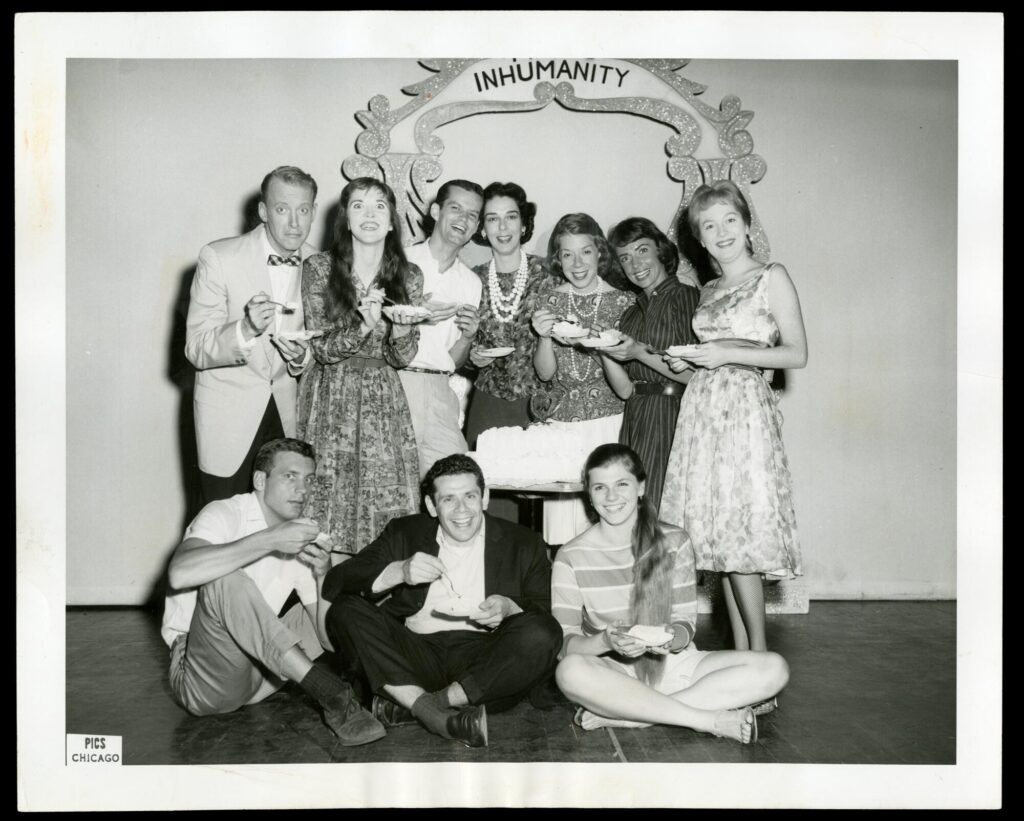
The youngest venue was the Happy Medium, a custom-built, space age-style performance venue that featured musical and comedy revues on the main floor, with a combination listening room/disco below.The club was right on Rush Street, at Delaware, a couple of blocks south of Mister Kelly’s. Although less remembered today than the other clubs, the Happy Medium was a success in its own right. It provided homegrown theatrical fare in a city dominated by touring Broadway productions and allowed the Marienthals to function as theater producers as well as cabaret impresarios. Together with the world-famous and still-running Second City improv club in nearby Old Town, the Happy Medium helped establish Chicago as a capital of sketch comedy. Several of the young Happy Medium cast members seen here – including Jennifer Warren and Tom Williams, along with Jerry Stiller and Anne Meara, a married couple and comedy team who also headlined at Mister Kelly’s – went on to varied and successful showbiz careers.
The Marienthals, both perfectionists, created just the setting they wanted. Vocalist Anita O’Day’s album ecorded live at Mister Kelly’s in 1958 notes that the club “offers the acoustic excellence and listening qualities necessary to any good recording activity,” as well as the sort of savvy audience that provides the “give-and-take that makes these albums permissible.” Another set of liner notes that accompanied a 1957 live album from Mister Kelly’s by legendary jazz songstress Sarah Vaughan remarks that “fifty-two hi-fi speakers, concealed in carefully selected spots around the ceiling, bring the entertainer to every table as though for each listener it were a private performance.” Even much later, in their fading years during the early 1970s, the clubs continued to put on a good show.
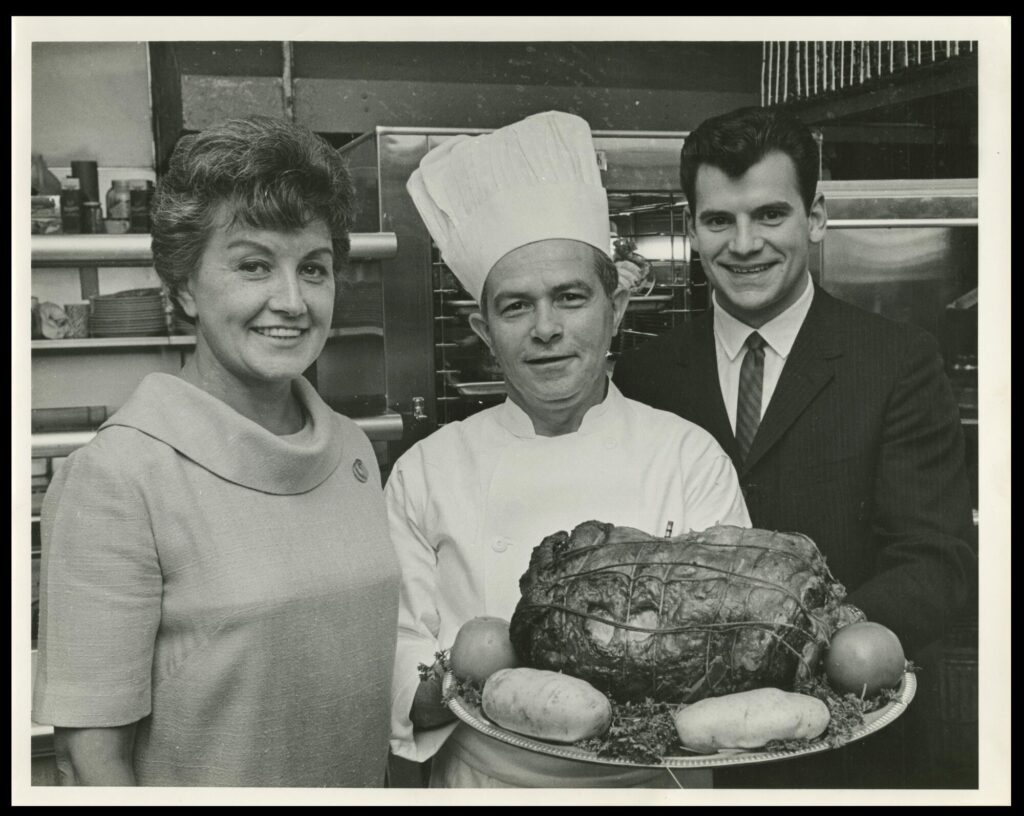
A night out at Mister Kelly’s or the London House was a multi-sensory experience. On top of the memorable harmonies and witty wordplay on stage, there was the venue’s handsome décor and well-prepared, meat-heavy meals, including the club’s trademark Green Goddess Salad and Candy Crunch Cake. The behind-the-scenes photo below shows London House manager David Maren, together with the house chef, holding a pot roast. The rich food, combined with strong drinks, smoky atmosphere, and high-energy entertainment, created a heady, intoxicating atmosphere, one very different from home or office. It was the era’s idea of fun, glamor, and sociability.
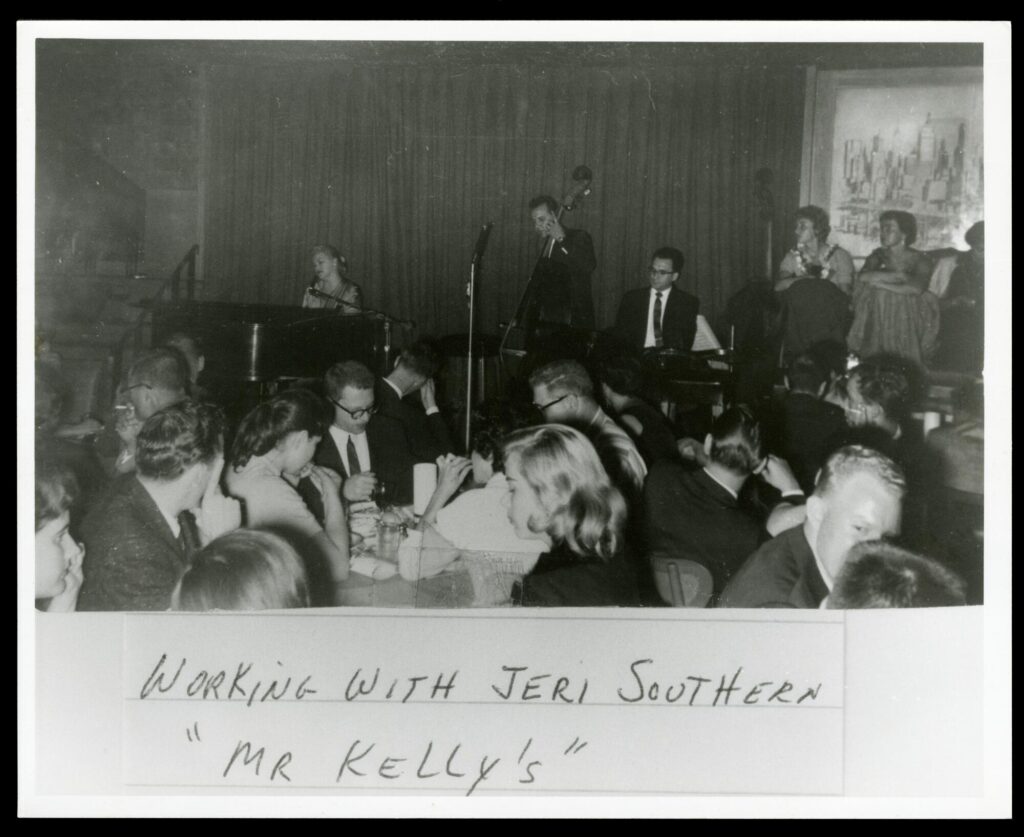
It was an era long preceding cell phone cameras, so there are relatively few interior photos available of Mister Kelly’s and the London House. Those we do have, such as this picture of jazz vocalist Jeri Southern, reveal the club’s crowded confines, inhabited by a crewcut, nattily dressed audience that’s enjoying itself, but which also seems aware of the specialness of the occasion. What the clubs offered was the unique intensity of a live performance by a name performer in a compact room, holding no more than about 200 people. We still have the stars, but we lack the intimacy. These photos of Mister Kelly’s and the other spaces offer a glimpse of an entertainment milieu that has largely disappeared.
Ask Students
The Marienthal clubs were businesses, of course, but they were also social, artistic, and to some extent political statements. In the way they booked and ran their clubs, the Marienthals embraced a progressive version of modernity, tying the hipness and relevance of their night spots to their ahead-of-the-pack policies. They fostered an inclusiveness and diversity not just of race but of ideas, too, as they sought to create spaces open to everyone where artists could express themselves freely.
What was remarkable about Mister Kelly’s programming is that – in an era of widespread racial segregation, both South and North, where hotels, restaurants and stores routinely discriminated against people of color – the club generally paired white and Black acts. If, for example, Black comedian Dick Gregory were headlining, he would likely be paired with a white musician; if white comedian Lenny Bruce were featured, he would most often be matched with a Black musician.
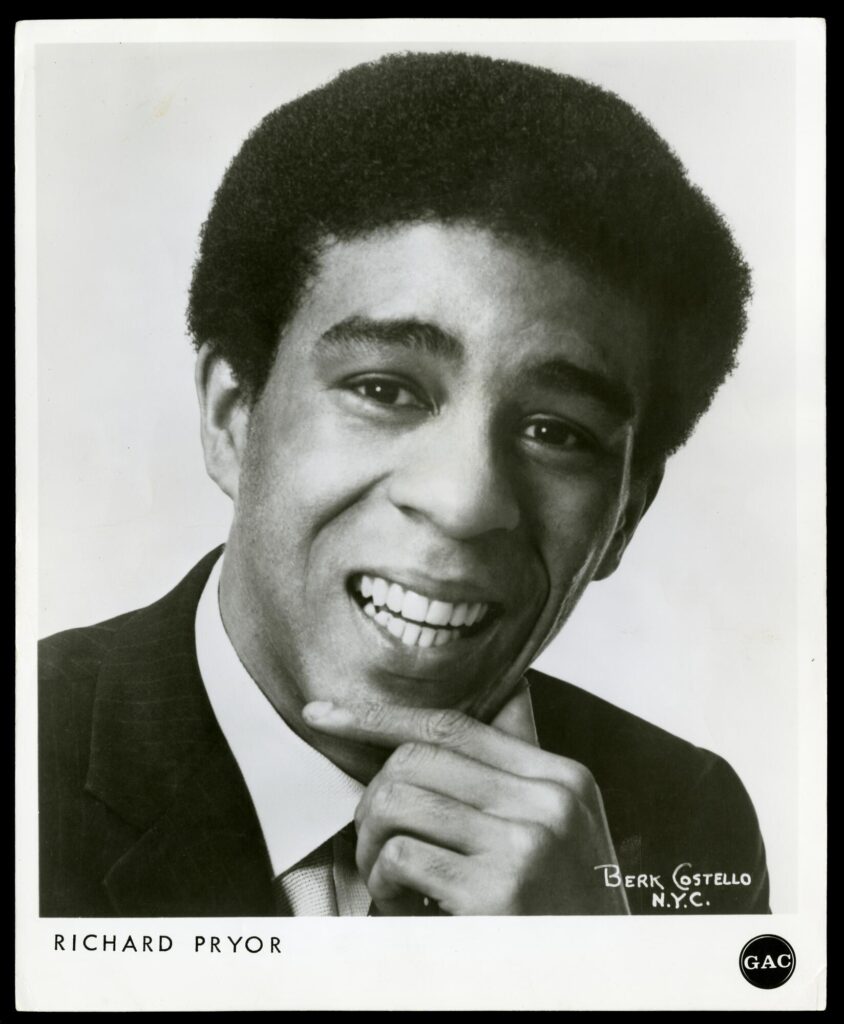
This policy meant, among other things, that Mister Kelly’s was a major launching pad for Black entertainers. Indeed, it’s where emerging stars such as Richard Pryor earned their spurs. It’s also where Pryor segued from the well-dressed, polite, and more-or-less conventional comedian he was at the beginning of his career, to the much more confrontational, political, four-letter-word-wielding figure he would become. Pryor was scheduled to perform at Mister Kelly’s on April 4, 1968, the day that Martin Luther King was murdered and cities across the country – including Chicago’s West Side – exploded in rage. When Pryor heard about the assassination, he got in a car with a Mister Kelly’s staffer, lit a joint, and roamed the city all night, sobbing. When he came back to performing, he was a changed man. Scheduled to return to Mister Kelly’s a year after the assassination, Pryor canceled his engagement when George Marienthal, fearful of potential audience reaction, apparently objected to the “blue” language that now characterized his act. Pryor never again performed at Mister Kelly’s. He took his act elsewhere, and with his frankness and sometimes overtly angry persona, changed standup comedy forever.
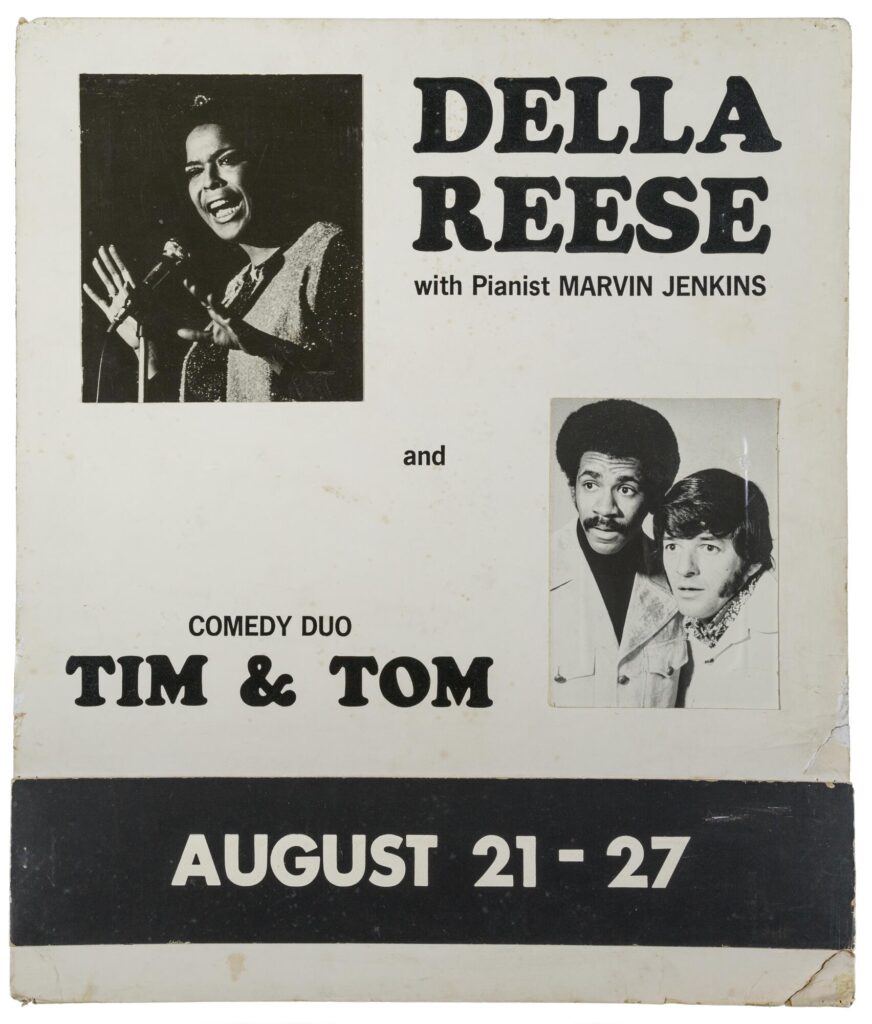
Perhaps the ultimate expression of Mister Kelly’s bold programming philosophy was the booking of Tim (Reid) & Tom (Dreesen), the pioneering interracial comedy team that formed in the late 1960s. Mostly working what was then known as the “chitlin’ circuit” of Black-owned venues, Tim & Tom found a home at Mister Kelly’s around 1970. At a time when racial conflict was at a high point, they found there a mixed and accepting audience, ready to listen to the pair’s funny but pointed take on the highly charged topic of being Black or white in America.
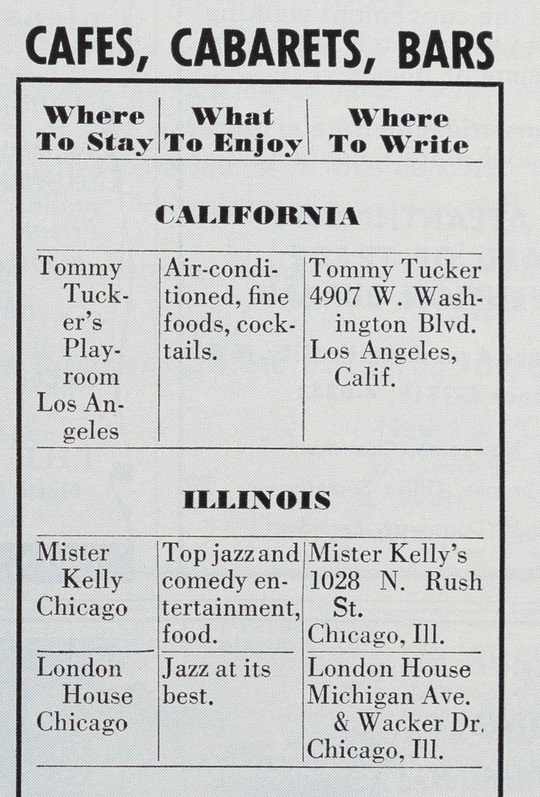
Rush Street in the 1950s and early 1960s was not famous for its racial sensitivity. But Mister Kelly’s prided itself in its inclusiveness. Everyone who loved good music, comedy, and food was welcome; no one was made uncomfortable. Mixed-race couples, subject to potentially rude treatment elsewhere, would make Mister Kelly’s their meeting place. The Marienthal venues received something close to official recognition for their liberal ways in 1960, when Chicago-based Ebony magazine, aimed at an African-American audience, listed Mister Kelly’s and the London House as the only local clubs recommended for its Black readers. In today’s parlance, Mister Kelly’s was a safe space.
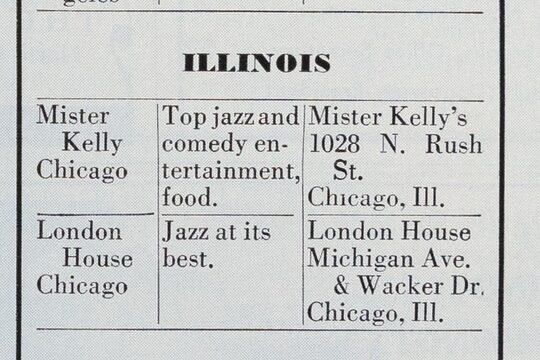
In so many ways, the Marienthals were ahead of their time, but their commitment to integration and promoting Black talent is what most distinguishes them. It was all part of their winning formula: forward-looking creative artists playing to a cool, open-minded crowd. They were on the right side of history, and it paid off for them and the city as a whole, which saw inclusiveness and togetherness in action on a nightly basis.
Ask Students
At its peak, from the late 1950s through the 1960s, Mister Kelly’s was arguably the top nightclub in America. Mister Kelly’s and its jazz-oriented sibling, the London House, made for a formidable one-two punch. Jazz musicians on stage included such legends as George Shearing, Chet Baker, Horace Silver, and Herbie Hancock, among myriad other top stars. Pop vocalists included not only Streisand, but also heavyweights such as Mel Tormé, Eartha Kitt, Bette Midler, and Lainie Kazan. The comedy roster comprised the most famous – and notorious – performers of the day, from Lenny Bruce, whose brilliant but off-color routines led to his arrest on obscenity charges in Chicago and elsewhere, to the unabashedly political and iconoclastic Mort Sahl, to such luminaries as Steve Martin, Lily Tomlin, George Carlin, Freddie Prinze, and Joan Rivers. It would be easier to name the stars of the day who didn’t grace a Marienthal stage. Mister Kelly’s became what we would now refer to as a powerful brand, with crowds lining up to get in even if they didn’t recognize the names on the marquee. The name that counted was Mister Kelly’s itself, a guarantee of quality and a good time. It worked the other way too, reassuring performers that they would be heard by a knowledgeable, open-minded, appreciative crowd.
![Detail of a newspaper clipping entitled, "Changes Ahead for Chicago Night Spots." Reads, "George Marienthal, Chicago's' Mister Nightclub, is not given to exaggeration. So when he says that the night club business is on the verge of big change, you can believe it. And tho he knows only what his own operations will be doing in the months ahead, he suspects that what's true for him will be true for other owners as well. "Among the changes he sees for his Mister Kelly's, London House, Happy Medium and Flower Pot are some that are already taking place, and others that will occur between now and late spring. "Kelly's began its image change a few weeks ago with the addition of a small dance floor, which diners have been slow to try. [Larry Novak's fine trio is feeling its way with that challenge.] Monday, tuxedoed maitre d' Monroe Elfenbein was replaced at the door by sports jacketed new maitre d' Will Sheldon. The result of that sartorial pendulum swing, Marienthal hopes, will be that Kelly's will be a less awesome place for the sometimes night clubber to enter. Other changes upcoming: a limited-menu luncheon, an afternoon cocktail session and a new dinner menu with some lower-priced [$3.95] entrees. "'We've got to attract the younger [21 to 35-year-old], more informal audience, which is the night life crowd now,' Marienthal says. 'We'll do this by making them feel welcome without compromising the quality of our food or the acts we book. We will book more hot, young acts--along with prove crowd pleasers, of course--and pass on those who have not been worth their price.'"](https://dcc.newberry.org/wp-content/uploads/2026/02/99_midwest_ms_mister_kellys_box_00004_fl_00203_01-506x1024.jpg)
Yet by 1975, Mister Kelly’s was gone forever, as were its sibling venues. Both Marienthals brothers were dead by then, and their mini-empire had passed out of family control. A New York Times headline at the time noted, “Jazz in Chicago is Muted by Demise of Top Clubs.” Mister Kelly’s and the London House could survive two massive fires a decade apart and two major riots in 1968, but they could not withstand the onslaught of youth culture in the 1960s and the displacement of jazz and show tune-based pop music by rock-and-roll and disco. Nor could it hold out forever against the larger venues, including glitzy Las Vegas show lounges and sprawling suburban supper clubs, which offered larger paychecks to performers and easier parking to patrons.
The newspaper article here, “Changes Ahead for Chicago Night Spots,” touches on the perception of stodginess that had attached to Mister Kelly’s by 1971. Noting that the former tuxedo-clad maître d’ had been replaced by a younger man wearing a sports jacket, the story’s writer adds that the change was made in the hope that, henceforth, Mister Kelly’s “will be a somewhat less awesome place for the sometime nightclubber to enter.”
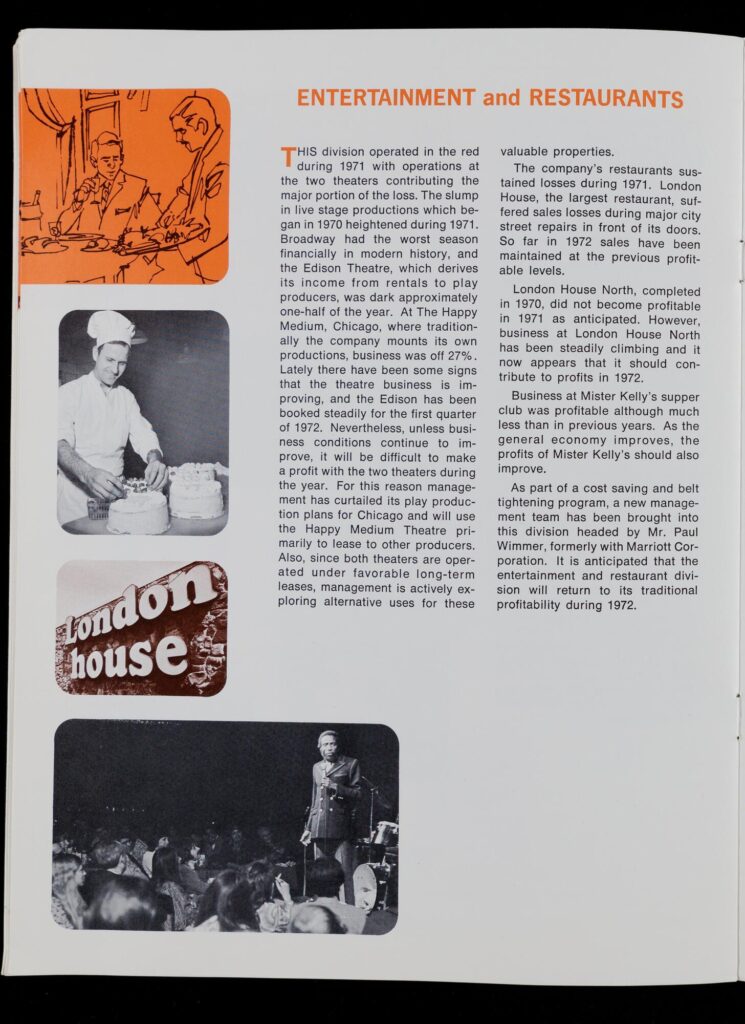
Already, it had become clear that what was chic and sophisticated in 1961 – an aesthetic captured in much later television series such as Mad Men and The Marvelous Mrs. Maisel – seemed passé ten years later. The nightclub experience itself, with its dinner jackets, solicitous service, and aura of conspicuous consumption, had lost its relevance to youthful partiers who desired another kind of social and sensory experience, something that didn’t feel quite so square and remind them quite so much of their parents.
As the entertainment world became more corporate and less personal, so too did the Marienthal empire. In 1971, Mister Kelly’s and the London House were purchased by the Arts and Leisure Corporation, a conglomerate that owned art galleries, printed greeting cards, and ran restaurant and entertainment venues, the division that George Marienthal headed until his death a year later. (The company also had a counterculture-oriented “Youth Products” department, comprising “Hip Products, Inc.” and “Voice of the Flower.”) But corporate control, with its layers of bureaucracy and bottom-line focus, did not mesh well with the Marienthal enterprises’ family heritage. Despite heroic efforts by management and staff – including Mister Kelly’s final supervisor, restaurateur Jerry Dambra – the curtain went down on all the venues in 1975. Said Dambra about his brush with nightlife history: “I was a lucky man to shut down the two best clubs in the world.”
Ask Students
For a twenty-year period between the 1950s and 1970s, Mister Kelly’s and its sister nightclubs served as places not just of entertainment and refreshment, but also of transformation. The Marienthal brothers’ attention to quality and detail helped transmute the less-than-respectable, mafia-ridden Rush Street area into a live performance district of national renown, thus altering and enhancing the image of Chicago itself. In addition, their ethical hiring and business practices, along with their commitment to create a safe and welcoming space for all and to feature a mix of white and Black acts, helped gently ease the previously segregated nightclub industry away from its racist past and into the dawning civil rights era.
On a smaller but still meaningful scale, the Marienthal clubs’ lofty standards, high profile, and unquestioned status as a kind of seal of artistic approval transformed many lives, launching performers such as Barbra Streisand, Bette Midler, Herbie Hancock, Richard Pryor, Woody Allen, Bob Newhart, Shelley Berman and so many others into national prominence. Mister Kelly’s and the London House helped keep jazz, which had been losing popularity throughout the 1960s, in the public eye. The club also elevated standup comedy from borscht-belt schtick and vaudeville gags into a potent art form that punctured illusions and challenged conventions and clichés with humorous but hard-hitting truths.
The agent of change that was Mister Kelly’s would itself fall victim, ironically enough, to social and economic changes, as cafe society gave way to youth culture, and the very idea of a high-class nightclub like Mister Kelly’s or the London House began to seem obsolete. The clubs could bend only so far before breaking in the face of shifting tastes and the ever-tougher competition for entertainment dollars.
Mister Kelly’s, the London House, and the Happy Medium are long gone, but they’ve never completely disappeared from public consciousness. They represent an apex of live entertainment in Chicago, when the best musicians and comedians performed on a daily basis at a couple of small local clubs, where they shared themselves with an audience sophisticated and broad-minded enough to appreciate their artistry, under the guidance of two brothers who both reflected and influenced public taste and who treated talent like family.
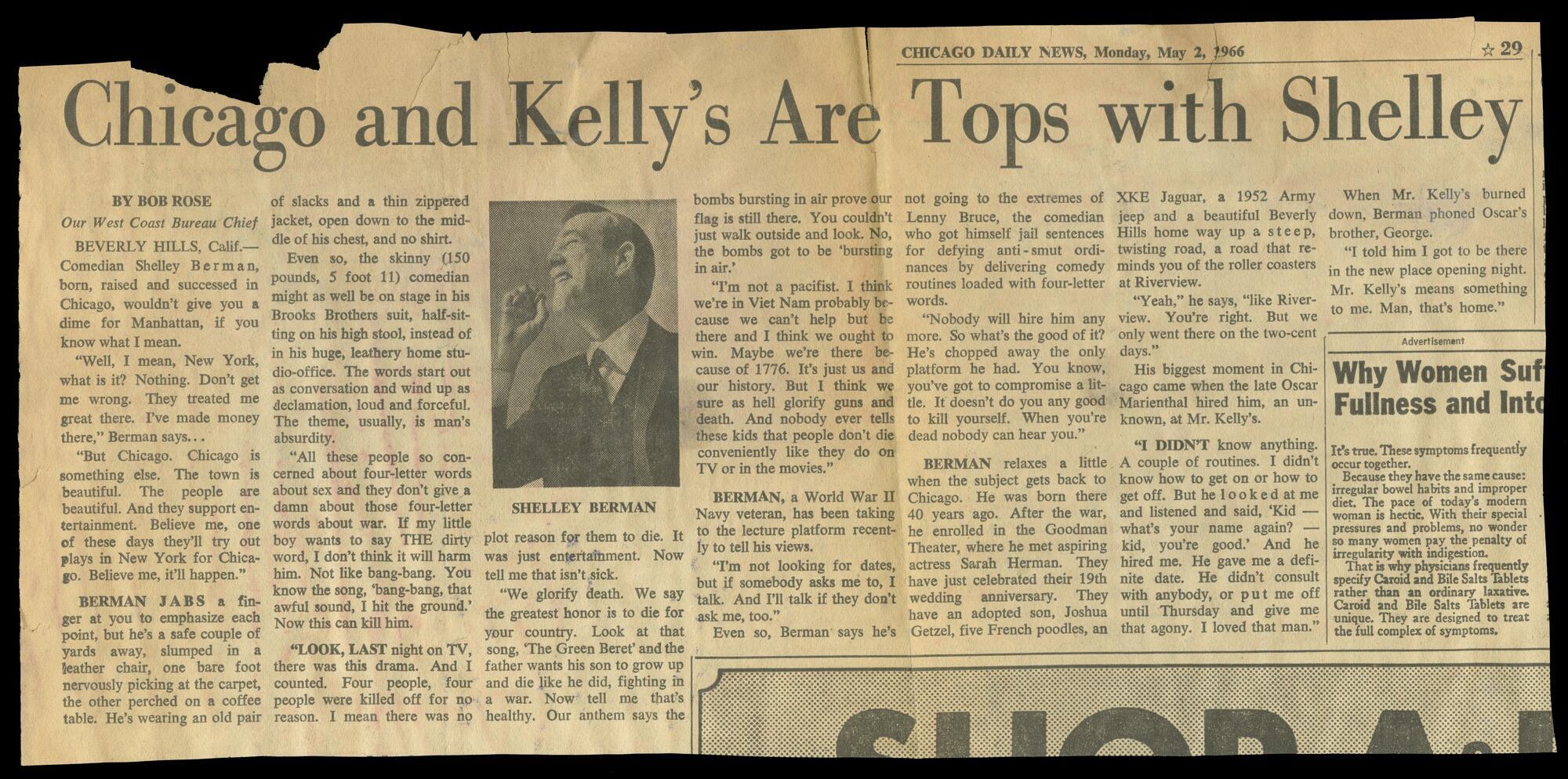
The newspaper article below underscores just how warm and personal the Mister Kelly’s experience could be for performers, and how much loyalty the Marienthal brothers generated. In his profile of standup comedian Shelley Berman, a longtime Mister Kelly’s favorite famous for his telephone conversation routines, the writer notes that “his biggest moment came when the late Oscar Marienthal hired him, an unknown, at Mister Kelly’s.” That’s where his act took off, leading to growing success at larger clubs, on records, and on television. Berman’s gratitude was boundless, as he explains to the writer: After the 1966 fire that shut down Mister Kelly’s for a year, “I told [George Marienthal] I’ve got to be there in the new place opening night. Mister Kelly’s means something to me. Man, that’s home.”
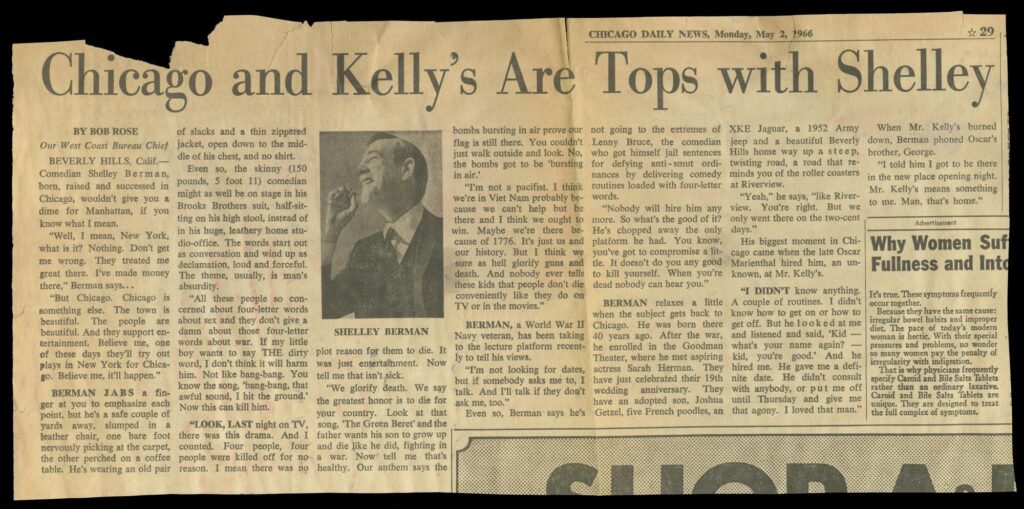
Mister Kelly’s felt like home to a great many people. That’s why there was such sadness when it closed, why it’s still missed by some so many years later, and why it’s worth remembering. The Marienthal clubs were places of entertainment, existing apart from wars, governments, revolutions, social movements, and all the other things emphasized in history books. But in their own way, the clubs helped shape the cultural mood of their era. They are windows – important windows – into a certain time and place, revealing much about how life was lived at a certain moment, and how it changed over the course of two key decades.
Ask Students
Hugh Iglarsh is a Chicago-based critic, essayist, satirist and editor, and a longtime member of the Nelson Algren Committee. His work – including theater, dance, book and art reviews, as well as political and cultural commentary and travel accounts – has appeared in a number of publications, including Newcity, CounterPunch and the Chicago Quarterly Review. His article “Empire of the Night: How the Marienthal Brothers Brought Class to Rush Street” was published in the March 2024 issue of Newcity. A jazz fan, Hugh regrets being born just a bit too late to experience Mister Kelly’s and the other Marienthal clubs.
The Marienthals worked hard to make their nightclubs inviting, fashionable places, down to the design of their china and matchbooks. These objects and photographs provide a glimpse into that environment.
For twenty years, Mister Kelly’s and its sister venues were local and even national institutions, signifying artistic accomplishment and appeal. Discover some of the many performers who appeared at the clubs through the photographs and album covers below.
In the way they booked and ran their clubs, the Marienthals embraced a progressive version of modernity. They fostered an inclusiveness and diversity not just of race but of ideas, too, as they sought to create spaces open to everyone where artists could express themselves freely. The sources below show their commitment to integration in the 1960s and 1970s.
Mister Kelly’s and the London House could not withstand the onslaught of youth culture in the 1960s and the displacement of jazz and show tune-based pop music by rock-and-roll and disco. Nor could they hold out forever against the larger venues which offered larger paychecks to performers and easier parking to patrons. Both clubs closed by 1975. These sources track their final years and the strength of their legacy.
Deam Milano. The Chicago Music Scene: 1960s and 1970s. Images of America (2009).
Hugh Iglarsh. “Empire of the Night: How the Marienthal Brothers Brought Class to Rush Street.” Newcity (March 19, 2024).
Live At Mister Kellys. Directed by Ted Bogosian (2021).
Richard Pryor with Todd Gold. Pryor Convictions and Other Life Sentences (1995).
Tim Reid and Tom Dreesen with Ron Rapoport. Tim and Tom: An American Comedy in Black and White (2008).
Vince Vieceli and Bill Brady. Stand-Up Comedy in Chicago. Images of America (2014).
“A Night at Mister Kelly’s” Exhibition Tour
“Comedy in Black and White: Tim Reid and Tom Dreesen” Public Talk
Watch more videos from the Newberry’s “A Night at Mister Kelly’s” exhibit here.