


Themes
US Empire & Imperialism
Historiography
Soldiers’ Experiences
Worlds Fairs
Periods & Events
19th Century
20th Century
Spanish-American War
Philippine-American War
Skills & Document Types
Close Reading
Image Analysis
Drawings
Postcards & Letters
Scrapbooks
Speeches
Use this essay and source set to:
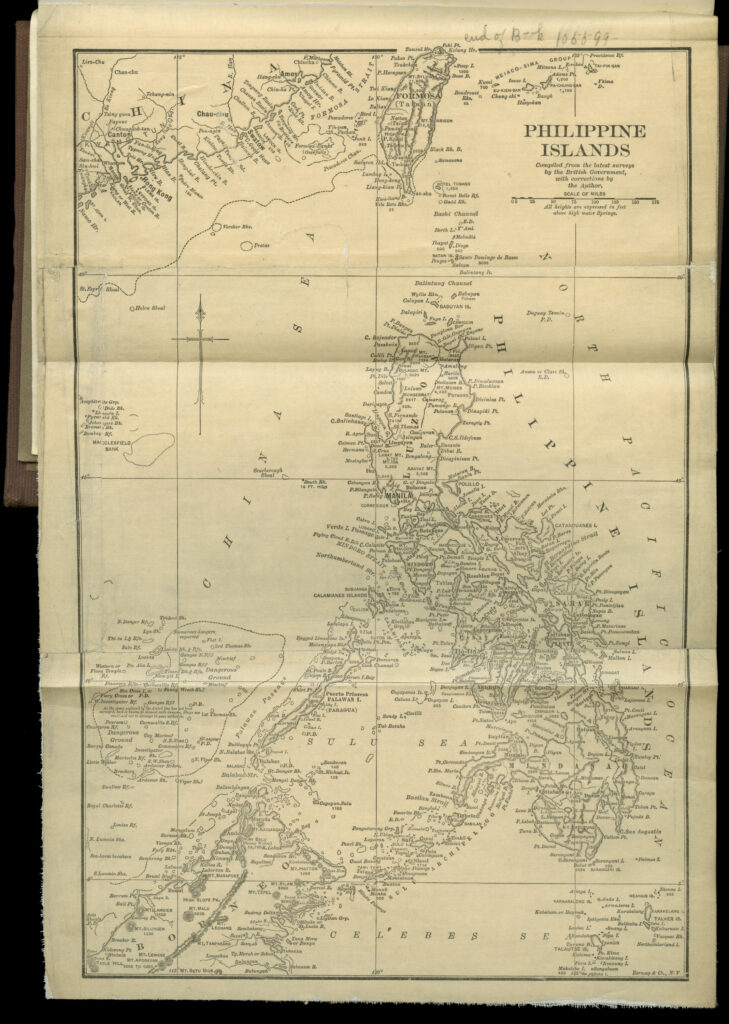
I didn’t learn anything about the Philippine-American War in high school. I’d hoped this had changed since the late 1990s, but in a recent (and deeply unscientific) poll I conducted in a college history class, students who had graduated from high school between 2018 and 2024 shared that they also hadn’t learned about the Philippine-American War in their history classes. There may be many reasons for this gap in our collective understanding: there is a lot of history to cover in a single high-school US History class, and the authors of our textbooks must always make choices about what stays and what goes. But this exclusion might also reflect the ways that the Philippine-American War challenges a core idea about the United States — namely, that it stands for democracy and freedom around the world, and that as a nation whose origin story centered the rejection of an outside colonial power, the United States would not embrace an overseas empire of its own.
The history of the Philippine-American War unsettles our understanding of the nation’s commitment to these values, and perhaps this is one possible explanation for why I consistently encounter students whose formal learning about this war begins and ends with the US defeat of the Spanish fleet by Commodore Dewey in the 1898 Battle of Manila Bay. The fighting that lasted more than a decade, and the US colonial presence in the Philippines that followed, are often fast-forwarded through in favor of focusing on World War II and the shared experiences of US and Filipino soldiers in the fight against Axis forces. In 1946, the United States acknowledged the sovereignty of the Philippines, ending a decades-long US colonial government whose legacies persist into the present.
In the essay that follows, I offer an overview of the Philippine-American War. The Newberry Library’s collections contain a wide range of material that can help us think about the lived experience of this war and its broad reach, from the letters and diaries of soldiers, reporters, and civil servants, to photographs and newspaper coverage shaping how people in the United States understood the Philippines, a diverse archipelago half a world away. It is important to acknowledge, however, that the Newberry’s collections offer limited access to how Filipino people experienced this war and the American colonial regime that followed. It is always important to think about how the materials in archives are acquired and preserved, because these processes have their own histories and their own politics.
Imperial ideas and actions stretched across many parts of people’s lives on both sides of the Pacific, and to understand the Philippine-American War, we need to begin in the US West.
Historians spend a lot of time thinking about beginnings and endings. After all, what kind of story we tell (and what kind of argument we make) has a lot to do with where our story starts and stops—and from which perspectives we look. There are many options for where we might start to tell the history of the Philippine-American War. We might begin with the histories of the many different people who lived in the Philippines before Spanish colonialism. We might examine the nature of the Spanish empire and the circulation of capital, goods, and people between what is now Mexico and the Philippines. Or, we might look at resistance to Spanish colonial power and plans for revolution organized by the Katipunan, a secret society in the Philippines, in the early 1890s. Looking from the perspective of US history, the emphasis is often on the Spanish-American War (1898) and the ways this led to the Philippine-American War (1899-1902). But only in more recent decades have some scholars emphasized the connections between late nineteenth-century United States military action in the western part of North America and its military activities in the Pacific at the turn of the twentieth century.
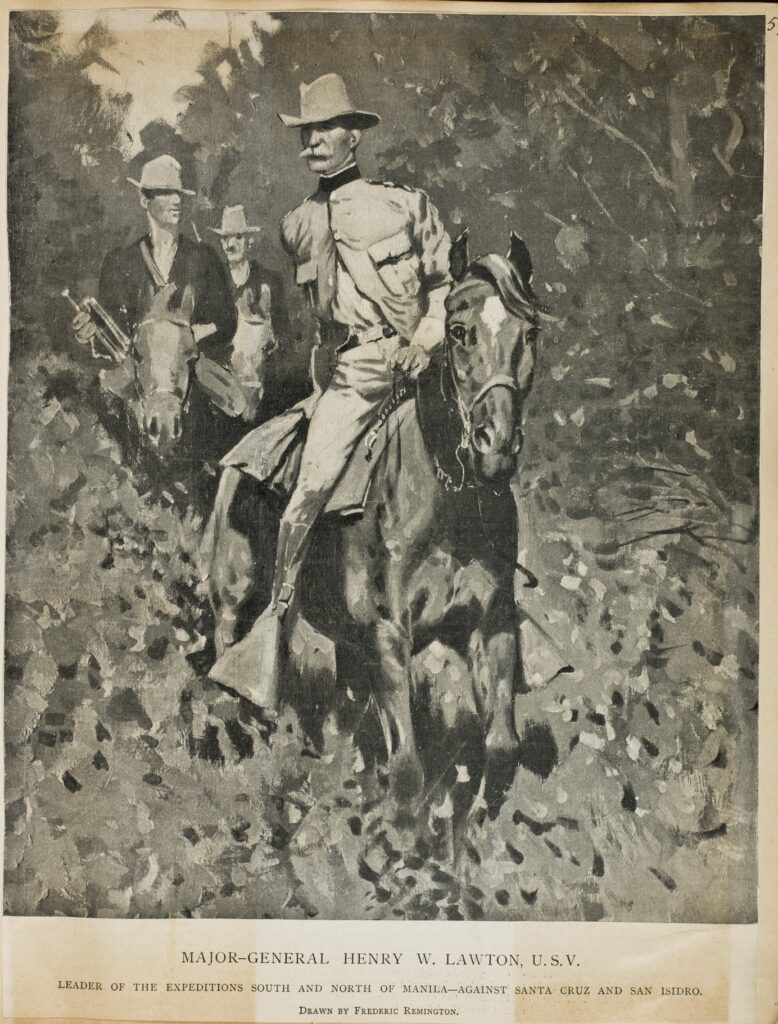
Another possible starting point for our consideration of the history of the Philippine-American War might be to think about who was fighting in it — a question which leads us almost immediately to a group of officers who had significant experience in what the United States called the “frontier army,” the regiments stationed in Indigenous homelands that were taken (by force and other means) and transformed into the western portion of the United States. Twenty-six of the thirty generals in the US Army during the Philippine-American War had also served in the frontier army in the US West (Capozzola, Bound By War, 18). This significant overlap between the officers who served in campaigns against Indigenous nations in the late nineteenth century and those who served in the Spanish-American War and the Philippine-American War reminds us that we should always look beyond the official boundaries of specific military actions. Army men bring the whole of their experiences to each deployment. In the case of soldiers whose service stretched across the Pacific Ocean, not only did these men connect their service in the Philippines to their service in the US West; plenty of others did, too. A prime example is the military career of General Henry Ware Lawton, whose service stretched from the US Civil War, to the Apache Wars and the campaign against Geronimo in the 1880s, to leading troops in Cuba as part of the war with Spain, to dying in battle in the Philippines in 1899.
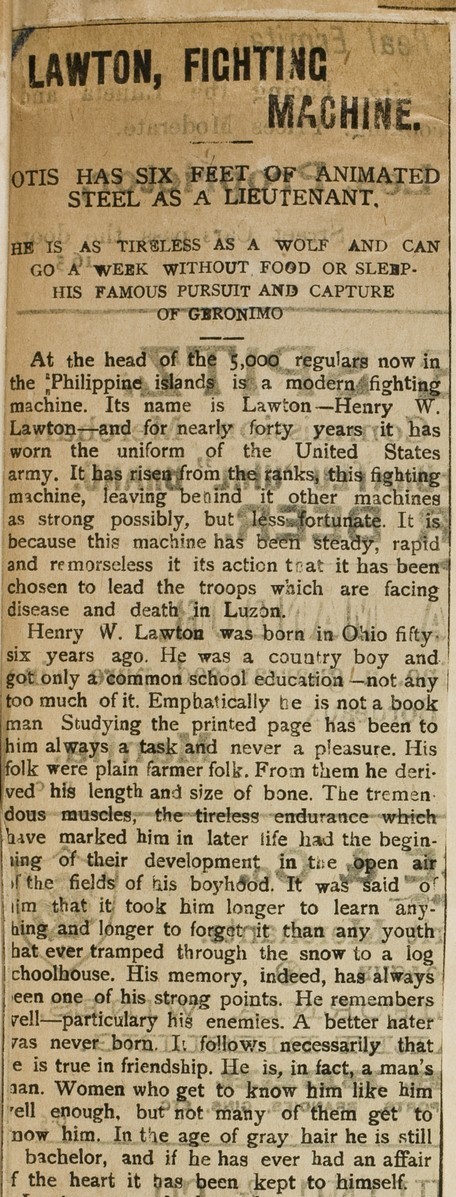
If Lawton was not already a household name, he became one in death as the highest-ranking American officer to die in the Philippine-American War. A scrapbook carefully assembled by family friend Robert Carter emphasizes not just the breadth of Lawton’s career, but the amount of public attention he received over the course of decades-long military service. Not only do the headlines Carter saved describe a man who was seemingly larger than life; they also make narrative connections between his service in the West against Indigenous people and his service in the Philippines.
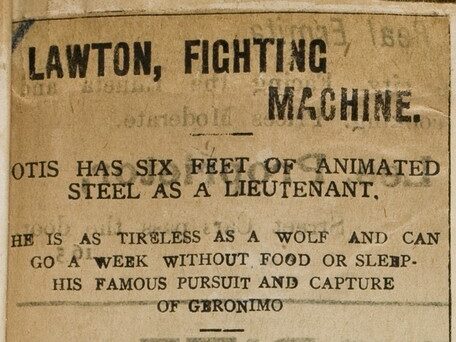
For example, Lawton served in the US Army in Apache homelands and played a crucial role in the eventual surrender and incarceration of Geronimo. And so, the fact that Lawton fell in battle against Filipino forces led by General Licerio Geronimo was a coincidence the press couldn’t help but emphasize. It affirmed Lawton’s embodiment of a “frontier” sensibility. Newspaper and magazine coverage of his activities characterized him as both an “Indian-fighter” and a “Fighting Machine,” as one headline read. An example like this speaks to a larger process we sometimes miss when we focus on a specific moment, battle, or war—the cultural frame within which participants and observers make meaning out of a particular moment.
Many soldiers who served on both sides of the Pacific, and many others who didn’t but read about the work of the frontier army, wrote about their experiences in the Philippines by making connections between fighting Native people in the US West and fighting Filipinos in the Philippines. Robert Carter’s Lawton scrapbook makes these kinds of connections visible and invites us to think beyond the battlefield. The scrapbook not only indicates how these moments were documented and remembered by people who experienced them and by people who read about them in letters and newspapers and magazines. It also shows how others added a layer of curation and interpretation to these materials by reworking them into a volume like this one. Take a look at some of the pages, and you’ll notice that Carter made specific choices about what to include here—much of it annotated in ways that reflect his own knowledge, as well as his proximity to the Lawton family.
Ask Students
- What have you learned, formally or informally, about the Philippines? What have you learned about the Philippine-American War? Reflect on why this might be.
- Think about the last historical moment that interested you: how might you begin telling someone else about it? What other possible starting points might there be, and how might they change your story?
- Does Henry War Lawton’s life expand your image of American empire? How?
- What do you observe about the Lawton scrapbook assembled by Robert Carter? What questions does this layered narrative of Lawton’s career raise for you?
To understand the origins of the Philippine-American War, we must look to the USS Maine. The destruction of this ship in Havana Harbor led to US intervention in the ongoing Cuban fight for liberation from Spain. In fighting the Spanish-American War (April-December 1898), the United States targeted sites of Spanish imperial power beyond Cuba. The defeat of the Spanish fleet in Manila Bay by Commodore George Dewey (afterwards, Admiral Dewey) and the US Navy on May 1, 1898, not even a week after the formal declaration of war, dealt a decisive blow to Spain — militarily and politically. The United States also sent ground troops to Cuba, and after the battles we sometimes learn about at El Caney and San Juan Hill, the United States occupied Santiago. Negotiations between the United States and Spain began in Paris in October, and what was called “a splendid little war” by US Ambassador John Hay was formally concluded with the Treaty of Paris, which was signed in December 1898 (Hoganson, Fighting for American Manhood, 6). But even as victory over Spain seemed certain, US military leaders did not have clarity about American visions for the Philippines.
This is often where our textbooks stop, without any further attention to the terms of the 1898 Treaty of Paris, the agreement marking the end of the Spanish-American War. But as part of the treaty, Spain agreed to sell Puerto Rico, Guam, and the Philippines to the United States for twenty million dollars. This sale paved the way for the US military to shift from liberating the Philippines from Spain to replacing Spain as a colonizing force. Of this transition, historian David Silbey wrote, “What the Filipinos had paid for in blood, the Americans had paid for with gold” (A War of Frontier and Empire, 4).
Even this brief narration is flawed, however, because it positions Filipinos outside of the story of 1898. Filipino resistance to Spanish colonial rule has a long history, and in the years leading up to the Spanish-American War, Filipino elites organized a rebellion that became known as the Katipunan Revolution. Though not successful in the mid-1890s, these efforts were reactivated as Spain’s hold weakened, and Filipino soldiers fought against the Spanish during the Spanish-American War.
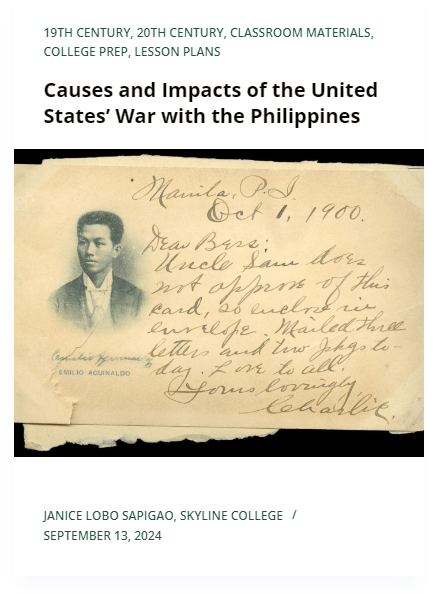
There were hopes that the United States would support Philippine independence. Emilio Aguinaldo declared the Philippines independent of Spanish colonial rule in the middle of 1898, and work on a new government began. And while Spain and the United States were negotiating war’s end in Paris (without including Felipe Agoncillo, who went to Paris to represent the interests of an independent Philippines), Filipino leaders were crafting their own founding document. This document “comprised the same fundamental principles on which that of the United States is based,” wrote Agoncillo in a plea written directly “To the American People.” The Philippine Republic was announced in early 1899, and Emilio Aguinaldo was named its first president. But the United States did not recognize an independent Philippine nation. Instead, when fighting broke out in Manila on February 4, 1899, each side said the other had started it. The United States ratified the Treaty of Paris and then went to war against Filipino forces.
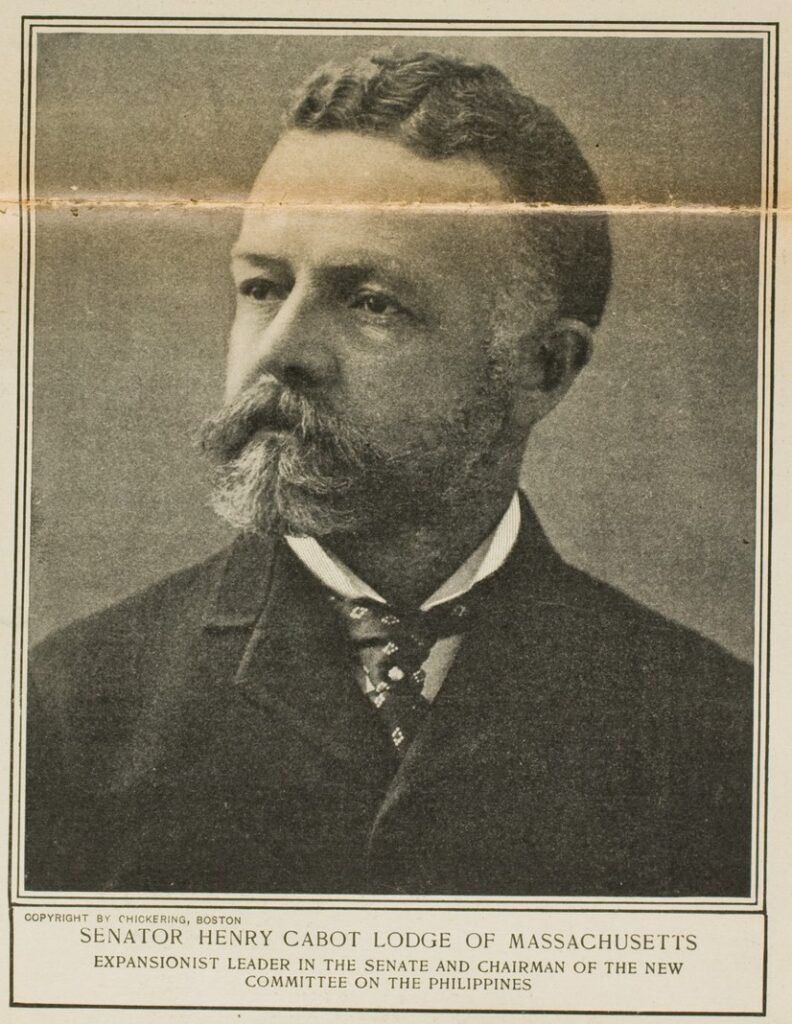
Even as war began, it was unclear exactly what the United States was fighting for. American public opinion was divided on the idea of American colonial control of the Philippines, and this was a key issue as the presidential election of 1900 approached. William Jennings Bryan and William McKinley were the candidates. Bryan was opposed to US colonialism in the Philippines, while McKinley came out in favor of it.
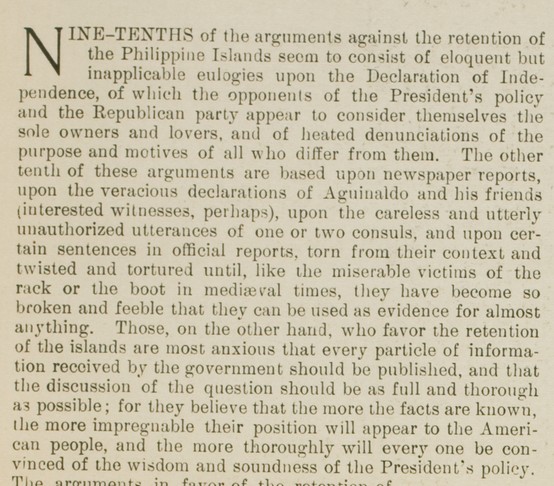
Folded into that scrapbook celebrating the life and career of Henry Ware Lawton is an essay written by Senator Henry Cabot Lodge, titled, “Shall We Retain the Philippines?” Lodge was an outspoken proponent of US control of the Philippines. In this essay, published in Collier’s Weekly on February 10, 1900, he argued that the United States had an obligation to retain control, no matter the desires of Filipinos. He wrote, “Upon the point of taking the islands without the consent of the governed a word may be said. We have never asked the consent of any inhabitant of all the vast territory we have annexed, with the single exception of Hawaii. If we had wanted the consent of the Filipinos there was no means of getting it…” Lodge explains the duty, as he saw it, of the United States to establish a “wise and beneficent government” for Filipinos but does not shy away from naming the economic opportunities for the United States in the Pacific — new resources, new markets. And to those concerned about the implications of US imperialism in the Pacific, Lodge explicitly states, “we shall never make their people part of the citizenship of the United States.” On the other side was Senator George F. Hoar, whom Collier’s also asked to write an essay with that same title: “Shall We Retain the Philippines?”
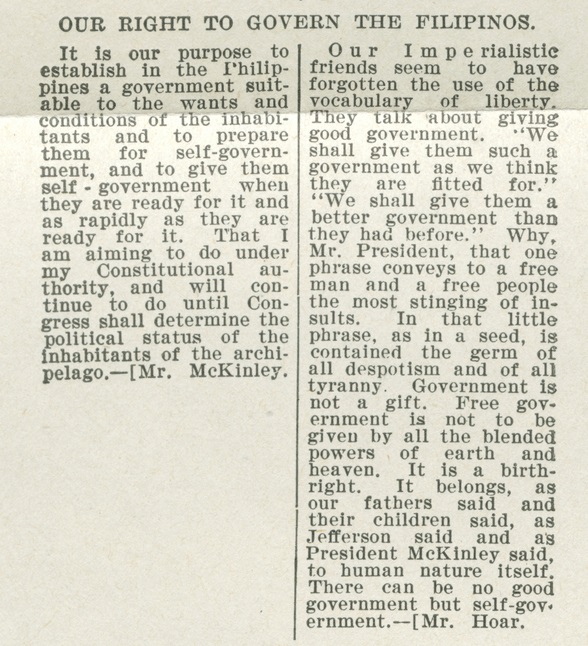
Hoar and Lodge, along with presidential candidate William Jennings Bryan and President (and incumbent candidate) McKinley, shared their views in a wide range of forums. In one such piece, the views of President McKinley (for retaining the Philippines as an American colony) and Senator Hoar (against imperialism and for granting Philippine independence) were positioned side-by-side. McKinley and Hoar offer conflicting answers about promises made to Emilio Aguinaldo, as well as competing interpretations of the violence between US and Filipino soldiers in early 1899 that launched the Philippine-American War. Hoar writes, “Our imperialistic friends seem to have forgotten the use of the vocabulary of liberty,” and concludes by affirming, “There can be no good government but self-government.”
It is important to acknowledge that sometimes an anti-imperialist position was rooted in racism and deep opposition to the possibility of incorporating Filipino people (read: non-white people) into the broader American polity. Others, however, highlighted echoes they noticed between US imperialism in the Pacific and Jim Crow laws at home. And the positions of proponents or critics of imperialism were not always consistent; ideas about Hawaiʻi, for example, might not match ideas about the Philippines. Both sides claimed the moral high ground. While imperialists framed their vision as an enactment of a “civilizing mission,” a commitment to “uplifting” and educating people they perceived to be inferior, anti-imperialists saw formal expansion into the Pacific as counter to the values underneath the American Revolution and the nation’s own history of challenging British colonialism (often without critiquing the behavior of the United States in relation to Indigenous nations in North America).
While Senator Lodge and President McKinley advocated for American control of the Philippines in a range of forums, a group of US politicians, writers, and industrialists — among them Senator George F. Hoar, Andrew Carnegie, Mark Twain, Grover Cleveland, and Eugene Debs — argued for granting the Philippines independence. This opposition to American empire in the Philippines organized under the heading of the Anti-Imperialist League, and at its height it counted 30,000 Americans as members (Brewer, 11). The Anti-Imperialist League employed many strategies for advocating for its positions — none more effective than brochures, pamphlets, and newspaper accounts. As the war stretched on, letters from US soldiers became an especially powerful tool of critique. A pamphlet published in 1899 included this quotation from a soldier from the First Nebraska Regiment: “I am not afraid, and am always ready to do my duty, but I would like someone to tell me what we are fighting for” (as quoted in Kohout, Taking the Field, 131). Cheryl Berudo argues that the print record assembled by the League is one of their most significant contributions. Though their position did not win out in the Philippines, their labor generated an “anti-imperialist archive” (Import of the Archive, 51-52).
We should also notice how specific choices shaped narratives about the Philippine-American War. For example, while it was happening, the United States called this conflict the “Philippine Insurrection” — a name that suggested that Filipinos were engaging in illegitimate rebellion, rather than fighting for the sovereignty of the Philippines. Today, we recognize this conflict as a war fought between an occupying imperial power (the United States), and Filipino forces imagining an independent and unified archipelago.
Ask Students
How do historians access the lived experiences of soldiering — in this and other wars? We look to a wide range of materials: military records, newspapers and magazines, soldiers’ official reports, as well as their diaries and letters home. US soldiers deployed to the Philippines generated a vast written record, and they commented on the people, culture, and landscapes they encountered as part of their Philippines service. They also shared their feelings about the war, and the emotions they felt being far away from loved ones. Sometimes what they wrote in their letters criticized US policy; in other moments, soldiers’ letters revealed racist ideas about the people of the Philippines. Soldiers’ ideas about their work— and the people they were tasked with fighting—were not uniform. We need to grapple with all that soldiers wrote and said, as well as with what they did to suppress Filipino resistance and establish an American colonial government in the Philippines.
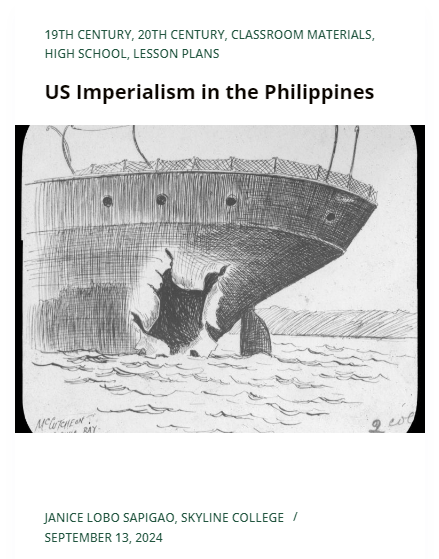
John T. McCutcheon was not a US soldier; he was a reporter and cartoonist for the Chicago Record. In the spring of 1898, he happened to be in Hong Kong, at exactly the right place and time to embed himself with Commodore George Dewey as he was sailing to take on the Spanish fleet in Manila Bay. This gave him a series of opportunities to do firsthand reporting on the Spanish-American War and then the Philippine-American War. McCutcheon’s reporting in the Record was how many Americans received their news about the war. But as historians with access to John McCutcheon’s papers, we can look both at his published work and at the notes he kept in tiny reporter’s notebooks over the course of his career.

Many of the notebooks in the Newberry Library’s collection of McCutcheon’s papers are small — the kind that would fit in a chest pocket. Reading the words McCutcheon scribbled on some of these pages requires a magnifying glass! As both artist and reporter, McCutcheon did more than scribble down his observations; sometimes he made sketches. Across the notebooks he kept while in the Philippines, there are pages containing drawings of the coastline of Luzon, as seen from his vantage point on a US warship; the positions of Spanish ships while they burn in Manila Bay; and sketches of key environmental features, like Mayon, the volcano that towered over the port city of Legazpi.
McCutcheon’s tiny notebooks help us see what McCutcheon noticed while he was embedded with US soldiers across the Philippines. His is an “on-the-ground” perspective. Perhaps because he traveled with US soldiers, he paid close attention to the distances covered by regiments once they left Manila, emphasizing the strenuous work of moving through unfamiliar landscapes. In a piece for the Record, McCutcheon took his time describing how difficult the terrain was, including a path “through a range of mountains, winding up and down, in some places almost impassable and in all places very hard, even on troops which had been hardened by fourteen days of constant hiking” (McCutcheon, Chicago Record’s Stories of Filipino Warfare, 40-41). “Hiking,” for US soldiers in the Philippines, came to mean far more than strenuous movement through tough terrain. Soldiers used this word, often keeping it in quotation marks in their diaries and letters home, to mean a wide range of both physical and military activities: summiting mountains, crossing rivers, burning farms and fields, confiscating cached weapons, and interrogating Filipinos suspected of being what the US army called “insurrectos” (Kohout, Taking the Field, 144-154).
The US Army employed the tactics of “total war” in the Philippines: they utilized a reconcentration policy to relocate civilians, depriving them of their belongings and their livelihoods; they overlooked the sometimes hard-to-find boundary between soldier and noncombatant, and regularly used torture, such as the “water cure” to extract information and inflict pain. Sometimes they killed prisoners, and in an example that made headlines in many American newspapers, they followed orders to make Samar a “howling wilderness” – by killing anyone “capable of bearing arms” (Kramer, The Blood of Government, 152-154, 144-145; Kohout, Taking the Field, 162-166).
Edward Seymour Walton served in the US Army from 1894 to 1926, with service in the Philippine-American War, the 1916 Punitive Expedition into Mexico, and in World War I. He retired at the rank of colonel. While in the Philippines, Lieutenant Walton wrote detailed letters home to his sister describing the challenges of his assignment. On March 18, 1900, from Panay, he wrote, “We ‘hiked’ up and down steep hills for an hour without finding the place and then had to sit down by the side of a little stream to rest as several of the men had fainted from the exertion and great heat.” Later in the letter, he describes a gunfight with “insurgents,” and writes, “It is very hard to go after these people because they are thoroughly at home in the mountains and know every little ravine and all the short cuts…White men cannot stand that sort of work now that it is getting so hot and the only way that we can get at them will be to take a couple of companies and live in the mountains for several days at a time and gradually drive them into a corner somewhere.” Here we see Walton mobilizing racist ideas rooted in pseudoscience about the relationship between whiteness and suitability for tropical climates.

In fact, many soldiers on both sides of the Philippine-American War deployed ideas about race. Black soldiers serving in the US Army were not all of the same mind about the war in the Philippines: some saw their service as an opportunity to demonstrate their excellence to those depending on them back home, while others (including, it seems, David Fagen, of the 24th Infantry, who deserted to join the Philippine Revolutionary Army) recognized the ways in which racism and imperialism were tangled together. And Filipino soldiers sought to capitalize on this with a pamphlet they circulated to Black soldiers in the US Army called “To the Colored American Soldier,” which pointed out American hypocrisy. The pamphlet named the 1899 lynching of Sam Hose in Georgia and asked Black soldiers to “consider your situation and your history” (Gatewood, Smoked Yankees, 258-259). One Black soldier who wrote home to his local newspaper used these words to describe what he had seen: “Expansion is too clean a name for it” (Gatewood, Smoked Yankees, 279-81).
Ask Students
President Theodore Roosevelt declared the Philippine-American War over in July of 1902, and the United States shifted control of most of the Philippines from military leadership to an American civilian colonial government. Early in this colonial project, the United States dispatched two separate Philippine Commissions—comprising of elite men representing American interests—to gather information about the Philippines and make recommendations about the archipelago’s governance and management. The first, led by Jacob Schurman (President of Cornell University) had both civilian and military members: Dean Worcester (a zoologist who had previously visited the Philippines as part of a scientific expedition), Charles Denby (Civil War veteran who had served as the US Minister to China), Admiral George Dewey (who led the US to victory over the Spanish fleet in Manila Bay), and General Elwell Otis (military governor of the Philippines). The Schurman Commission (1899) recommended a structure for an American colonial government. While they noted the ongoing struggle for Philippine independence (first against Spain, now against the United States), they concluded in exceedingly paternalistic language that Filipinos were not ready to govern themselves.
The second, or Taft, Commission (1900) was charged with legislative authority by US President McKinley, and its members implemented a civilian government that included a bicameral legislature, with one half popularly elected and the other half comprising of the Philippine Commission (now a body with shifting membership), and William Howard Taft as Governor-General of the Philippines.
This government was created through two US laws: the 1901 Spooner Amendment and the 1902 Philippine Organic Act. The Spooner Amendment gave the US President civilian authority to govern the Philippines (rather than relying on the president’s wartime military authority). The 1902 Philippine Organic Act followed the Spooner Amendment and outlined the structure for the US colonial government in the Philippines. These laws, combined with a set of US Supreme Court decisions on what became known as the Insular Cases (1901-1905), reframed the reach and the limits of the US Constitution and broadly affirmed US imperialism. For example, the decisions in these cases articulated a distinction between incorporated US territory (territories on the path to statehood, meaning citizenship and full constitutional rights) and unincorporated US territory (areas not intended for statehood, where people would not receive full constitutional rights – only those deemed “fundamental”) Thus, the Insular Cases “constitutionally justified imperialist policy” (Gelpí, 22-23).
The Bureau of Insular Affairs was also established in 1902 inside the US Department of War, elevating a smaller office that had been created in 1898 to manage US overseas territory. In the 1930s, the Bureau of Insular Affairs moved to the Department of the Interior. In thinking about the long history of United States imperialism, we might reflect on the resonances between the dispossession of Indigenous people in the US West and their incarceration on reservations—a system managed first by the Department of War, and later by the Department of Interior—and the governing structures established to manage US colonial possessions like the Philippines, Puerto Rico, and Guam.
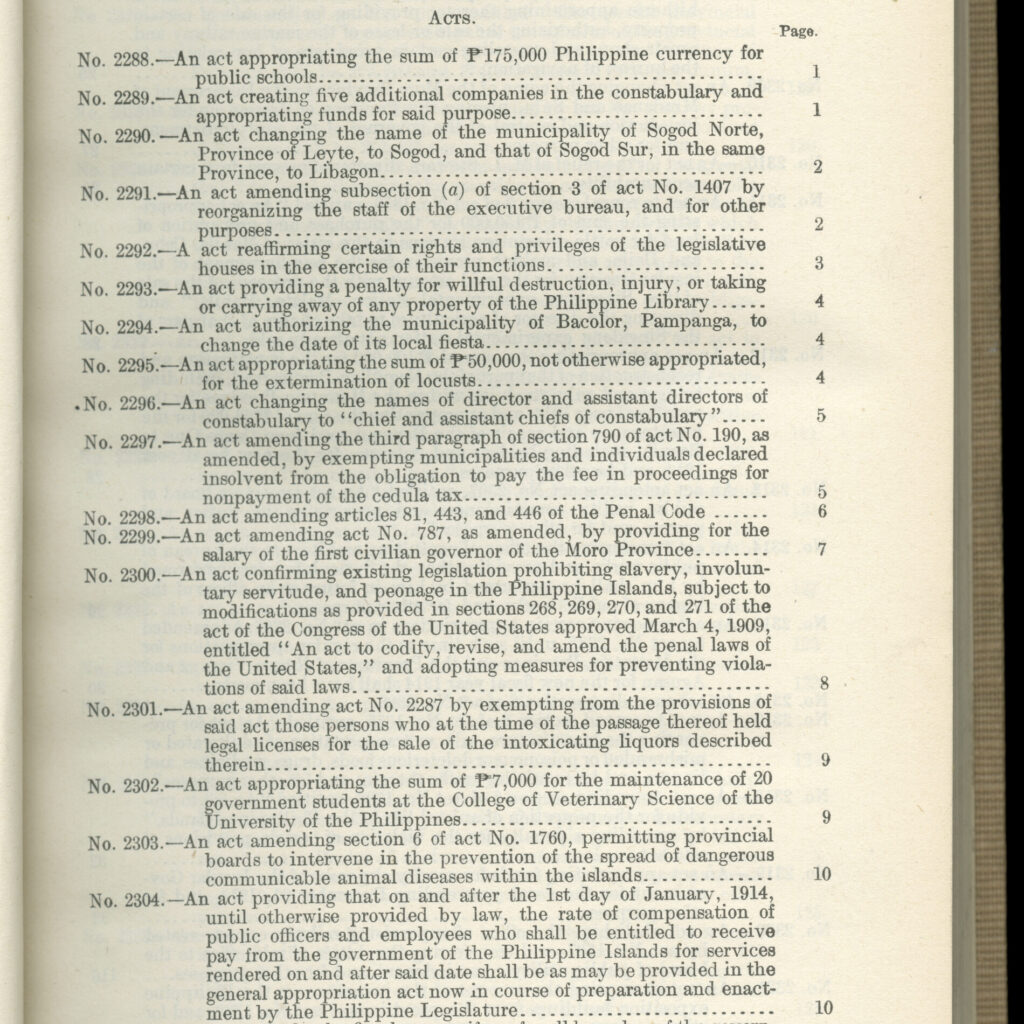
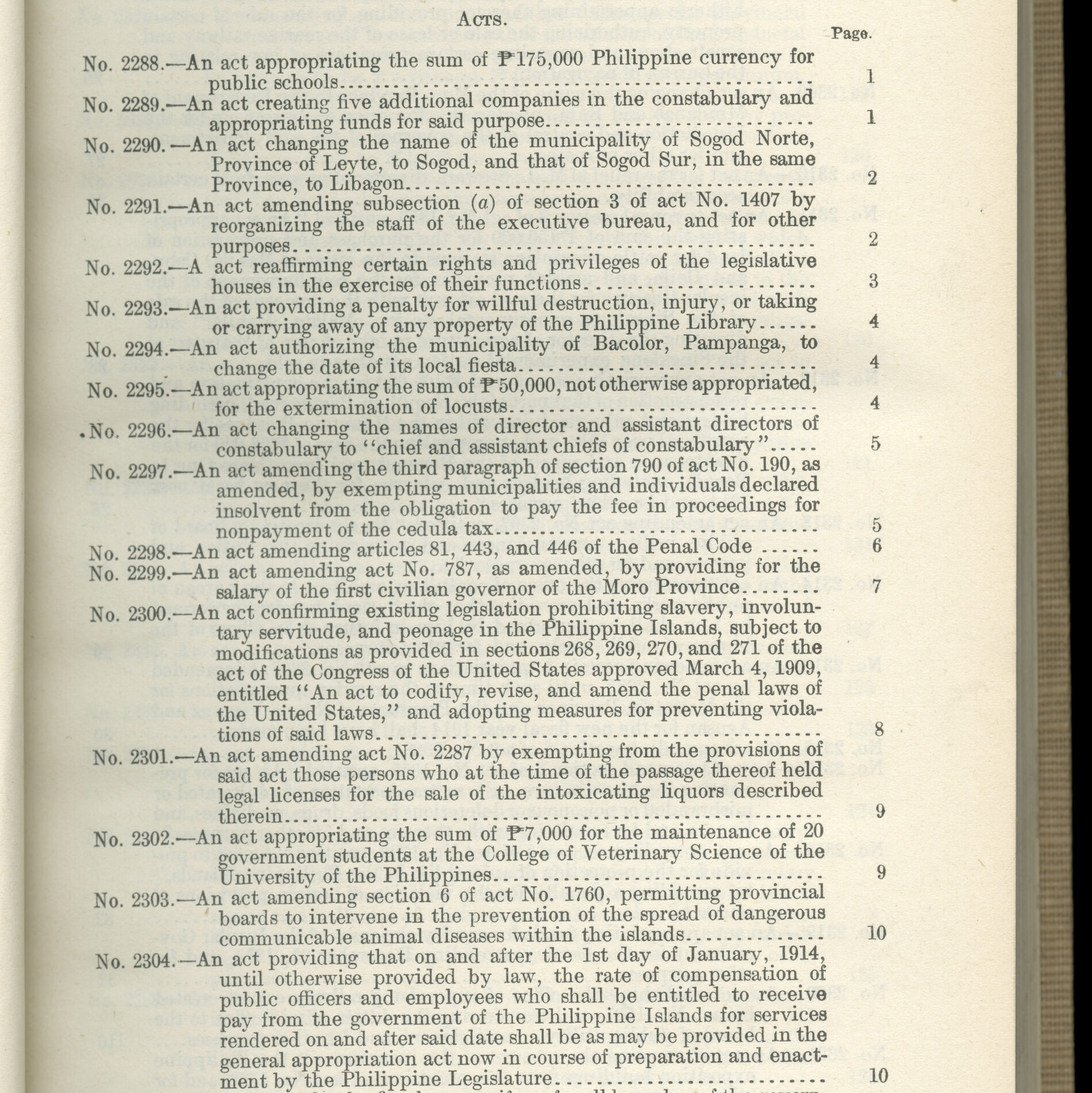
In the first decade of the twentieth century, the American civilian colonial government in the Philippines generated an impressive amount of legislation and bureaucracy. Examining the table of contents from the 1913-1914 legislative sessions reveals the scope of this colonial government, which made decisions on everything from pest management to false advertising, taxation, cattle branding, and the reorganization and renaming of various government departments and positions. But even as colonial infrastructure ballooned outward from Manila, Mindanao remained under military authority. It was the site of continued fighting between US military forces and local communities for another decade. The Spanish labeled the people of Mindanao “Moros” —a name that reflects a colonial category imposed from the outside. What the United States called “Moroland” was home to many different groups who managed to mostly be left alone under Spanish colonialism, and who strongly resisted American military control.
US military action in the southern part of the Philippines was marked by a brutal series of punitive expeditions and the 1906 Bud Dajo Massacre, in which the US Army slaughtered hundreds of Taosūgs who had taken refuge inside the crater of an extinct volcano on the island of Jolo. A photograph of US soldiers posing with dead Filipinos in the crater circulated widely in its time and reflected the brutality the Philippine-American War had become known for. US forces carried out another massacre at Bud Bagsak in 1913. Though increasingly infrequent, skirmishes occurred until Philippine independence in 1946.
We’ve covered almost half of century of the history of US colonialism in the Philippines in this section—from the official end of the Philippine-American War and the creation of a civilian colonial government to the ways that US military violence tried to end Filipino resistance in Mindanao long after 1902. It is important to understand what happened in this tumultuous period, but sometimes a focus on those exercising power and enacting violence means we miss what it was like for Filipinos to experience this war and its outcomes. Historian Christopher Capozzola writes, “Historians will never agree on the number of the dead, but they all acknowledge the devastation” (Bound By War, 64). And then he offers some estimates: 4200 US soldiers killed; between 15,000 and 20,000 Filipino soldiers killed; and between 100,000 and 300,000 Filipino civilians killed or dead as result of the tactics of total war.
Ask Students
Recrossing the Pacific and traveling, in our mind’s eye, to the 1904 St. Louis World’s Fair, might seem a strange way to conclude an overview of the Philippine-American War. But world’s fairs were major sites of storytelling about the United States and its relationship to the wider world in the late nineteenth and early twentieth centuries, and the 1904 St. Louis World’s Fair is no exception. While historians usually turn to the Chicago World’s Fair (1893) and its White City (designed by Daniel Burnham, the same architect responsible for an American colonial retreat in Baguio in the Philippines) to make arguments about visual culture and national narratives, the 1904 St. Louis World’s Fair, with its forty-seven-acre Philippine Exposition, offers us an opportunity to think about how both fairgoers and workers treated like exhibits understood US empire.
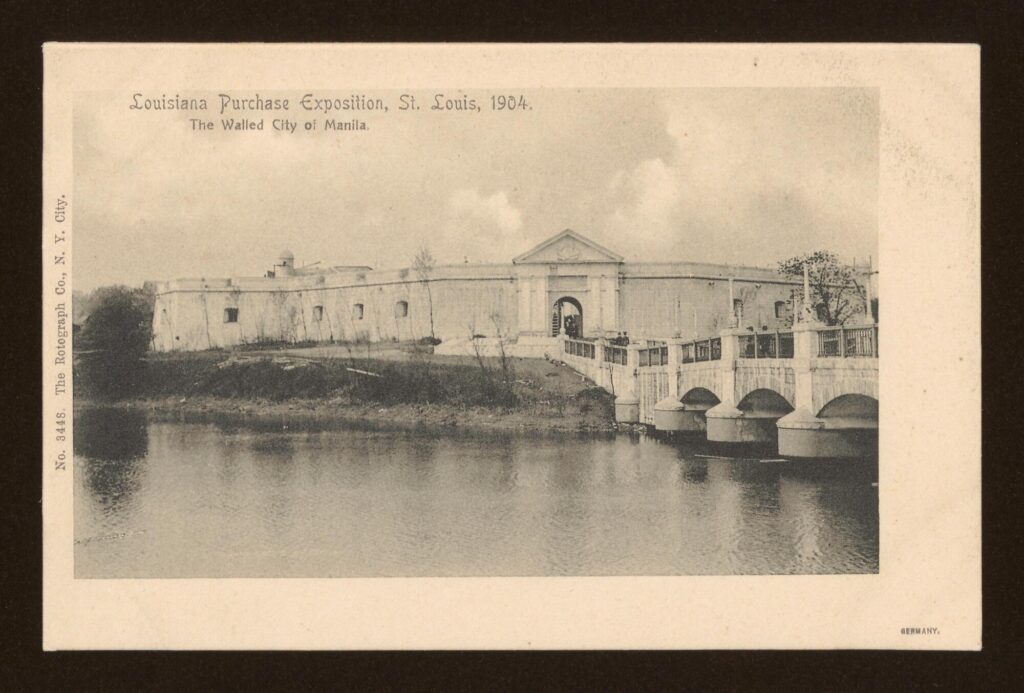
In St. Louis, many aspects of American imperialism were displayed and consumed, including ideas about racial hierarchy that placed white European societies at the top – and non-white people at the bottom. The layout of the fair made arguments, too: by positioning Indigenous people from North America on one side of “Arrowhead Lake” and Filipino people from all over the archipelago on the other, fairgoers crossed from encountering Native people from the West to observing Filipinos also navigating life under American colonialism. Many different exhibits at the fair added up to an overarching story about US colonialism as a vehicle for “Progress” and societal development. These exhibits emphasized that Filipinos had the potential for the American vision of civilization by displaying Filipino schoolchildren learning from American teachers and Filipino Scouts led by US officers, but they also drew attention to what they framed as primitive behavior, such as dog-eating or headhunting, to justify the ongoing occupation and American colonial government in the Philippines. These examples were used as evidence for the imagined superiority of colonial powers and the benefits that US or western civilization supposedly brought to the colonized. We see these ideas over and over again in the essays, newspaper articles, and political cartoons of this period—and in coverage of the fair, specifically.
We should also ask questions about the Filipino people who traveled to St. Louis to participate in the fair. Despite their presence in a vast visual archive, of which these postcards at the Newberry Library are part, we know far less about the lives and choices of these people – who had their own reasons for making the long trip across the Pacific. Once in St. Louis, they were tasked with constructing their homes in a traditional style, and living on the fairgrounds, where, for several hours each day, they were on display as the main draw of the Philippine Exposition. What historians know about their lives comes mostly from an archival record generated by fair planners and fairgoers – like this postcard featuring Igorot weavers. Why did these women come to the fair? What was their journey like? What did they think about the people who came daily to look at them? Where did they go after the exposition ended? Did they stay on the fair circuit, or return to the Philippines?
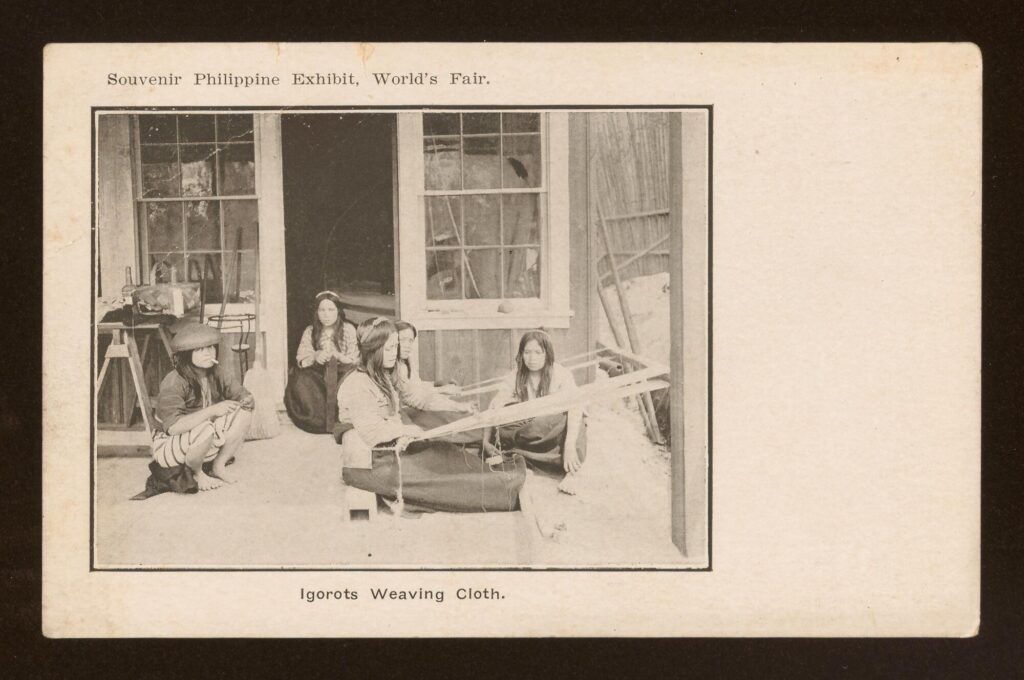
These questions mattered in 1904, and they continue to matter today. As part of efforts to remember the 1200 Filipino people brought to St. Louis (including seventeen people who died during the fair), local artist Janna Añonuevo Langholz spent years advocating for a Philippine Village Historical Site marker, which was installed in March 2025. Langholz has researched the lives and stories of many of the people who participated in the Philippine Exposition as part of efforts bring attention to these more unsettling aspects of the exposition’s history alongside stories of the invention of the ice cream cone and the beauty of Forest Park, today a beloved city green space at the very center of St. Louis. Studying the Philippine-American War also means grappling with ideas about colonialism and white supremacy – ideas that were foundational to the war’s beginning, but also to its legacies, which extend far beyond where this war was fought.
Ask Students
Amy Kohout is Associate Professor of History at Colorado College. She works on US cultural and environmental history, and her research and teaching interests include the US West, American empire, museum studies, the history of natural history, and world’s fairs. She earned her BA. in history from Yale University, and her MA and PhD in history from Cornell University. Amy’s first book, Taking the Field: Soldiers, Nature, and Empire on American Frontiers (Nebraska, 2023) received two awards from the Western History Association in 2024: the Hal K. Rothman Book Prize, awarded annually for the best book in western environmental history, and the Robert M. Utley Book Prize, awarded annually for the best book on the military history of the frontier and western North America. In 2020-21, she held the David J. Weber Fellowship for the Study of Southwestern America at the Clements Center for Southwest Studies at Southern Methodist University, and she was a 2022-2024 fellow of the Bright Institute at Knox College. Her work has been published in Museum History, Rethinking History, Sustainability Science, The Appendix, and A Companion to the History of American Science. Amy has worked on public-facing, collaborative projects centering historical research and writing; she was a co-founder of Backlist, a digital site where historians recommend books they love, and before that she served as an editor at The Appendix, a journal of narrative and experimental history.
The sources in this section show connections between the Philippine-American war and broader US imperial action. Many of the US officers in the war, like Major-General Henry W. Lawton, had previously fought Indigenous nations in what is now the Western United States. They brought that experience to the Philippines. So did US politicians, like those quoted in the excerpts below, who made points about liberty and supposed racial superiority to argue for and against US control of the Philippines.
Primary sources by soldiers and civilians help us understand how they experienced and documented a war. The sources here by journalist John T. McCutcheon and soldier Edward Seymour Walton illustrate and describe how they experienced battles, the environment, and the tactics of “total war.”
These sources provide examples of ways that the US exerted control over the Philippines. The first source shows just a few of the many laws US leadership passed to build a colonial administration. The postcards depict Philippine exhibits at the 1904 St. Louis World’s Fair. Legacies of the fair continue today, through the lives, stories, and descendants of the 1,200 Filipinos who came to St. Louis.